


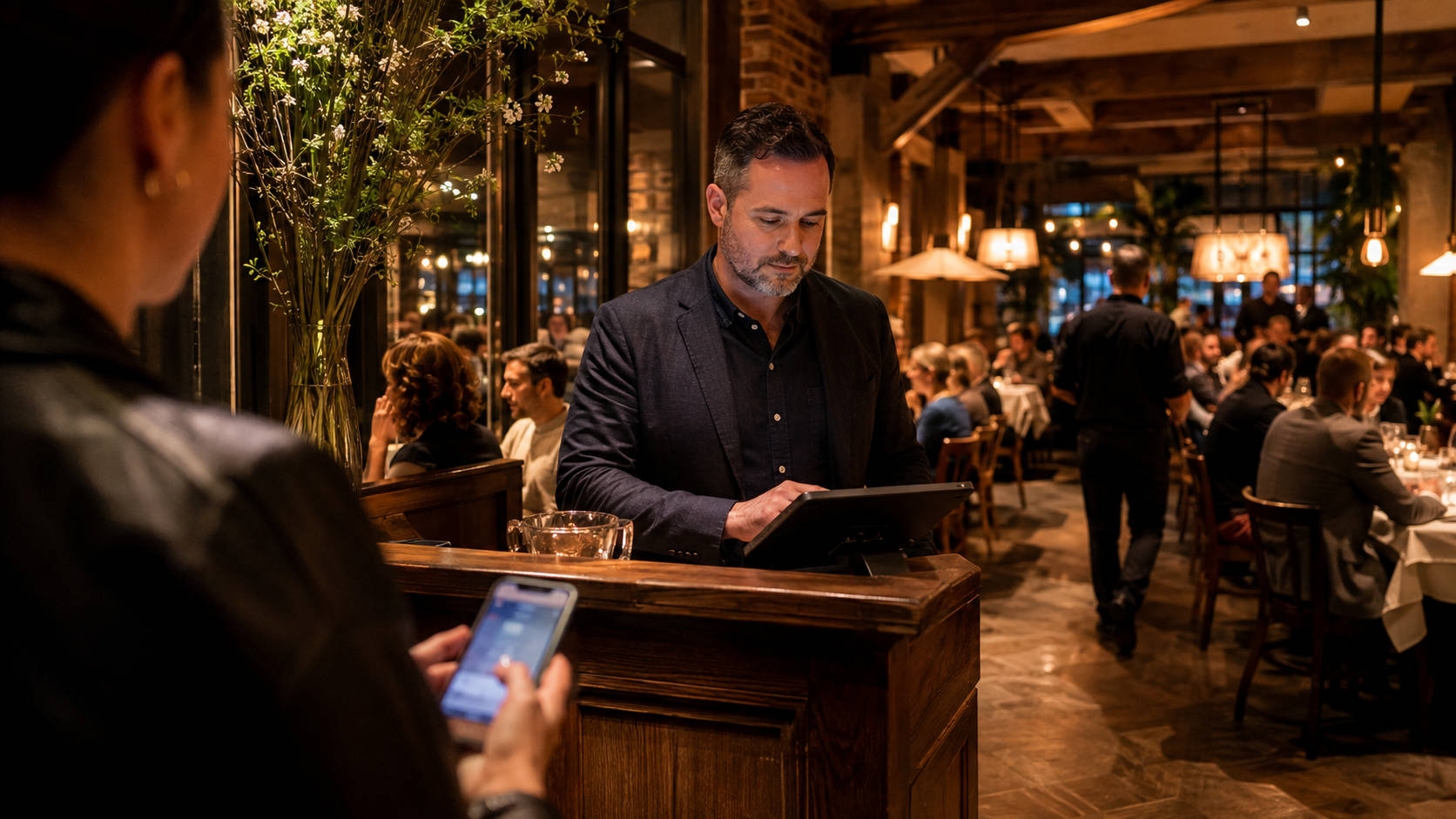
Delivery apps, reservation platforms, and premium cards are wiring discovery, booking, rides, and rewards around the dining table. Here is what restaurants gain, and what they should protect.
- The App That Owns the Night Out
- Why Are Restaurant Reservations Becoming Subscription Perks?
- DoorDash Reservations Are Part of a Much Bigger Platform Loop
- Why Restaurants Are Saying Yes
- A Full Dining Room Can Still Hide a Dependency
- Seven Questions to Ask Before Allocating Tables to a Platform
- The Smart Strategy Is Reach Plus Ownership
- The Real Contest Is the Relationship, Not the Order
- Frequently Asked Questions
- More Helpful Reads
The App That Owns the Night Out
You open DoorDash on a Tuesday with no plan to order delivery. You are just browsing. A place you have never tried appears, and DoorDash Reservations lets you book a table without leaving the app. Because you carry a membership, you unlock a time slot that ordinary users cannot see, plus a discounted ride to get there. Dinner is excellent. A few days later, the credit you earned for showing up nudges you into a delivery order from a different restaurant entirely. One kitchen cooked a memorable meal in person. Another cooked one for your couch. The restaurants prepared both meals. Another company connected almost every decision around them.
Why Are Restaurant Reservations Becoming Subscription Perks?
Restaurant reservations are becoming subscription perks because delivery platforms, reservation companies, and premium-card issuers have found that access to a desirable table is a strong reason to join, stay, and spend. Packaging tables with credits, rides, and exclusive booking windows raises membership value. Restaurants gain genuine discovery and booking demand, but they should study the inventory, economics, data access, and customer ownership they trade for it.
DoorDash Reservations Are Part of a Much Bigger Platform Loop
DoorDash did not simply add a booking button. In 2025, it acquired the reservation and hospitality company SevenRooms in a deal reported at about $1.2 billion, gaining guest-management infrastructure rather than a link. DoorDash Reservations grew from there. Per DoorDash’s 2026 announcement, diners who book and attend can earn platform credits, reported at $10 for standard users and $12 for DashPass members, while DashPass members can reach certain exclusive tables and discounted Lyft Black rides to selected reservations. It launched in a few markets first and has added more since, so check the app for current coverage.
DoorDash is not alone. Uber Eats Dine Out links food ordering with OpenTable reservations and, for some members, ride and booking perks. American Express has turned dining into a premium-card draw through Resy credits and Tock, and in June 2026, it agreed to acquire the European reservation company TheFork. Different companies, one direction: discovery, booking, transportation, and rewards are being wired together.
| Company or program | Reservation layer | Member benefit | Question restaurants should ask |
| DoorDash / DashPass | DoorDash Reservations, built on SevenRooms | Booking credits, exclusive tables, discounted rides | Which tables and slots go to members? |
| Uber Eats / Uber One | Dine Out with OpenTable | Cross-channel ride and booking perks | Is this a new demand or a demand we had? |
| American Express | Resy, Tock, agreed on TheFork deal | Dining credits, premium reservation access | Who funds the perk, and what data do we get? |
Delivery apps are no longer competing only for restaurant orders; they now want to be the operating system around the entire dining occasion. The table is becoming a customer-acquisition and loyalty asset for the platform around it.
Why Restaurants Are Saying Yes
The appeal is real. These platforms already hold the attention of millions of diners choosing where to eat, and appearing inside that decision puts a restaurant in front of people who might never have found it. DoorDash has pointed to an early San Francisco test in which, by the company’s own reporting, 80% of diners using its dining feature had not previously ordered from the restaurant they went on to visit. That figure is company-reported pilot data, not independent proof, but it captures why operators pay attention: the promise is incremental discovery, not just easier booking.
The practical gains stack up, too. Booking becomes easier for the guest. Empty tables on a slow night can be filled. Waitlist and cancellation tools reduce lost coverage. Knowing who is coming helps the kitchen and the front of house prepare. A guest who found you through delivery might book a table, and a guest who booked a table might order delivery later. For a new restaurant, an unfamiliar concept, a soft daypart, or a business trying to reach beyond its regulars, that exposure can matter a great deal.
A Full Dining Room Can Still Hide a Dependency
Here is the harder question. A booked-out Friday feels like a win, and often it is. But a full room can still hide a dependency, and the details decide which one you have. A platform can fill a table while still standing between the restaurant and the guest.
Start with memory. When a platform handles discovery, booking, the ride, and the reward, does the guest remember your restaurant or the app that unlocked it? The reservation is becoming a form of loyalty currency, and currency builds loyalty to whoever issues it. If the credit a diner earns is spent inside the platform, that repeat behavior may attach to the membership rather than to your kitchen.
Then consider allocation. If prime tables are set aside for members, are they going to guests who would have booked anyway, and does that thin availability affect existing regulars? Exclusivity can bring in new faces or simply reprice access for people already in the door.
Data is the quiet part. Which guest details can you actually see, export, and combine with your own sales records, and can you market to that guest later with consent? The answer varies by platform, contract, and local privacy rules. A platform rarely owns the customer outright; more often, it mediates more of the customer journey, and each layer it mediates is one you no longer control alone. Terms change, too. Fees, rankings, and membership rules are set by the platform and can be revised. None of this makes the partnership bad. It means the outcome depends on what the agreement says.
Seven Questions to Ask Before Allocating Tables to a Platform
Before you hand any inventory to a reservation platform, treat it like the business negotiation it is. These seven questions are enough to run during a sales call.
- Which tables, dates, and time slots will be allocated? Decide deliberately rather than defaulting your best Friday windows to the platform.
- Is this producing new demand or redirecting demand you already had? Ask how incremental bookings are measured, not just total bookings.
- What fees apply, and who pays for the customer benefit? Credits, ride discounts, and exclusive perks are funded by someone; know whether it is you, the platform, or both.
- What guest information can you access, export, and use with permission? Confirm what you can view, download, and connect to your own records.
- Can you keep promoting reservations through your own website and channels? A platform relationship should not quietly become your only booking path.
- How are cancellations, deposits, no-shows, and waitlists handled? These rules protect revenue when seating is limited.
- What happens to your guest history and booking channel if you leave? Understand the exit before you sign, not after.
You will not get perfect answers to all seven. Clear answers to most of them tell you how balanced the relationship really is.
The Smart Strategy Is Reach Plus Ownership
The smartest strategy is not platform rejection. It is a channel balance. Marketplaces and reservation apps are good at reach, and reach is genuinely valuable. The goal is to use it without making it the only relationship you have with the guest.
That means keeping channels you control alongside the ones you rent: a strong restaurant website, a direct reservation option where staffing and operations allow, direct online ordering, loyalty that rewards guests for returning to you rather than to a membership, permission-based email and SMS so you can reach diners yourself, consistent customer records and reporting, and a brand that looks like yours on every channel.
Orders.co helps independent restaurants build direct ordering, loyalty, marketing, and reporting around their own brand, so the relationship a marketplace starts can continue on the restaurant’s terms. A reservation marketplace may introduce the guest. Your own channels are what let you keep them.
The Real Contest Is the Relationship, Not the Order
A full dining room is still a win. The question worth sitting with is whether you could fill that room again without the platform that sent the guests. The next contest in restaurant technology will not only be about who processes the order. It will be about who controls the relationship before the guest arrives and after they leave. Reach is worth paying for. Ownership is worth protecting.
Frequently Asked Questions
Yes. DoorDash Reservations lets diners discover and book participating restaurants inside the DoorDash app in supported markets. Coverage and the list of bookable restaurants keep expanding, so check the app for current availability in your city, because the rollout has been changing since its 2026 launch.
In supported markets, yes. Uber Eats Dine Out connects the app with OpenTable so users can book a table, and some members see added ride or booking benefits. Availability and which perks are live vary by location and membership, so confirm what applies before assuming a feature is universal.
Exclusive tables are reservation times or inventory made available to specific members, cardholders, or platform users rather than the general public. This usually refers to a portion of selected inventory, not every table at the restaurant, and the exact arrangement depends on the platform and the restaurant’s agreement.
It depends on the platform. Pricing models vary and can include software subscriptions, per-cover charges, payment-processing fees, promotional arrangements, or negotiated enterprise terms. Because published rates change and are often customized, restaurants should confirm the current fee structure directly with each provider before signing.
It depends on the booking channel, privacy consent, and your agreement with the platform. Before committing inventory, confirm exactly what guest information you can view, export, combine with your point-of-sale records, and use for marketing with permission, since those rights differ meaningfully from one provider to another.
Card holds, deposits, and prepaid bookings mainly exist to discourage no-shows and protect revenue when seating is limited or the experience is high-value. Empty reserved tables are costly, so these policies reduce that risk. They work best when the terms are transparent and easy for guests to understand.
Yes, a direct booking option preserves customer choice, keeps attribution with the restaurant, and supports a closer brand relationship, while third-party platforms still provide discovery. The strongest mix depends on your demand, staffing, technology, and each provider’s terms, so weigh direct and marketplace channels together.


