


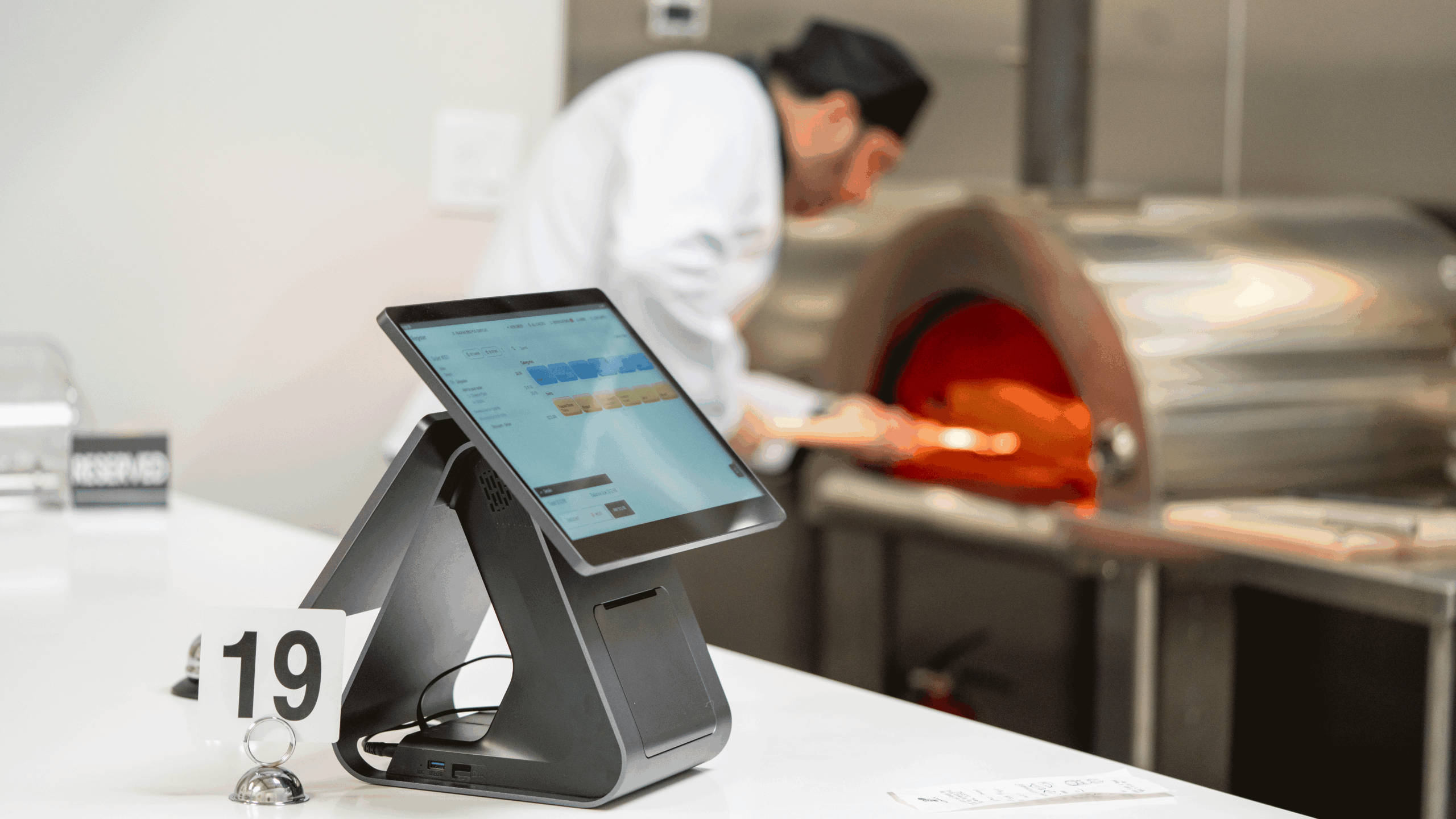
- Why Today’s Restaurants Need More Than Just a POS
- What Makes a POS System Strong and Flexible?
- 1. All-in-One Capabilities
- 2. Built-In Online Ordering and Website Management
- 3. Flexible Catering Management
- 4. Dynamic Menu and Table Management
- 5. Built-In Loyalty and Rewards Programs
- 6. Seamless Third-Party Integrations
- 7. Affordable and Scalable Growth
- The Growth Impact: Why Your POS Choice Matters
- What to Avoid in Weak POS Systems
- Where Orders.co Fits Into This Conversation
- The New Standard for Restaurant POS Systems
Why Today’s Restaurants Need More Than Just a POS
If you’re running a restaurant today, you’re probably doing a lot more than taking orders and processing payments.
You’re managing delivery apps, updating menus, tracking labor costs, responding to customer reviews, running promotions, handling catering orders, and trying to keep service moving during your busiest hours.
The problem?
Most restaurant technology wasn’t built for the way restaurants operate today.
Many restaurant owners find themselves juggling multiple tablets, disconnected software, and systems that don’t communicate with one another. One platform manages online orders. Another handles loyalty. A third controls delivery. A fourth manages reporting.
Instead of saving time, technology often creates more work.
That’s why the role of the Point-of-Sale (POS) system has changed dramatically.
A modern POS is no longer just a digital cash register. It’s the operational hub of the restaurant. It integrates front-of-house service, back-office management, online ordering, customer retention, and business growth into a single system. The strongest POS systems help restaurants operate more efficiently, reduce mistakes, and create better customer experiences.
So what separates a strong and flexible POS system from an outdated one?
Let’s break it down.
What Makes a POS System Strong and Flexible?
A strong POS system doesn’t just help you run your restaurant today.
It gives you the flexibility to adapt tomorrow.
Whether you’re adding online ordering, opening a second location, launching catering services, or trying to increase repeat business, your POS should support growth rather than limit it.
Here are the characteristics that matter most.
1. All-in-One Capabilities
One of the biggest frustrations restaurant operators face is technology overload.
A POS system should bring operations together—not create more complexity.
Strong POS systems provide one platform for:
- Dine-in orders
- Takeout orders
- Delivery orders
- Catering operations
- Payments
- Customer management
- Reporting
When all systems work together, staff spend less time switching between screens and more time serving customers.
Restaurant Reality
A pizza shop receives orders from Uber Eats, DoorDash, Grubhub, walk-in customers, and phone calls.
Without an integrated system, employees may monitor multiple tablets while manually updating menus and inventory.
With an all-in-one POS, every order flows into one dashboard, reducing errors and speeding up service.
2. Built-In Online Ordering and Website Management
Online ordering is no longer optional.
Customers expect to order directly from your website just as easily as they can order from third-party delivery apps.
A strong POS should include:
- Direct online ordering
- Website integration
- Mobile-friendly ordering experiences
- Real-time menu synchronization
- Customer data collection
Direct ordering gives restaurants more control over the customer experience while helping avoid expensive third-party commissions. Restaurants that build direct ordering channels gain ownership of customer relationships, customer data, and marketing opportunities.
Why It Matters
Every direct order gives you valuable customer information that can be used to drive future sales through loyalty programs, email campaigns, and promotions.
Third-party apps introduce customers to your restaurant.
Direct ordering helps you keep them.
3. Flexible Catering Management
Many restaurants are adding catering to increase revenue.
Unfortunately, most traditional POS systems treat catering orders exactly like regular orders.
That’s a problem.
Catering requires unique workflows such as:
- Custom quotes
- Large-order management
- Scheduled fulfillment
- Flexible payment options
- Delivery coordination
- Proof of delivery
A flexible POS should support both everyday restaurant operations and large catering events without requiring separate software.
Example
A local restaurant may serve 200 dine-in guests on Friday night while also preparing a $3,000 corporate catering order for Monday morning.
Managing both through one connected system reduces confusion and improves accuracy.
4. Dynamic Menu and Table Management
Menus are constantly changing.
Items sell out.
Prices change.
Seasonal specials are introduced.
Manually running those updates across multiple ordering channels is time-consuming and risky.
Strong POS systems offer centralized menu management so operators can update items once and automatically push those changes across:
- In-store ordering
- Online ordering
- Delivery platforms
- Mobile apps
Some industry studies show that nearly one-third of restaurant owners update menus every month, making centralized menu control increasingly important.
For full-service restaurants, advanced table management is equally important.
Features like:
- Floor plans
- Table assignments
- Server management
- Waitlist integration
help improve service speed and guest experience.
5. Built-In Loyalty and Rewards Programs
Getting a new customer is expensive.
Keeping an existing customer is profitable.
That’s why loyalty programs have become one of the most valuable tools in restaurant growth.
A flexible POS should include:
- Points-based rewards
- Custom loyalty programs
- Email marketing integration
- SMS campaigns
- Customer segmentation
Today’s customers expect digital rewards and personalized experiences. Loyalty programs are becoming increasingly important in driving repeat visits and customer retention.
Customer Mindset
Restaurant owners often say:
“I don’t need more customers. I need more repeat customers.”
A strong POS helps turn first-time visitors into regulars.
6. Seamless Third-Party Integrations
Third-party platforms aren’t going away.
Customers order through Uber Eats, DoorDash, Grubhub, Google, and countless other channels.
The problem isn’t using these platforms.
The problem is managing them separately.
A strong POS integrates with:
| Integration Type | Why It Matters |
| Uber Eats | Centralized delivery management |
| DoorDash | Faster order processing |
| Grubhub | Menu synchronization |
| Stripe | Payment flexibility |
| Accounting Software | Better financial visibility |
| Marketing Platforms | Customer retention |
| Inventory Systems | Better cost control |
When systems communicate automatically, restaurants reduce manual work, avoid missed orders, and eliminate duplicate menu updates.
7. Affordable and Scalable Growth
Many POS systems start out affordable but become expensive as restaurants grow.
Every additional feature seems to require another subscription.
Another add-on.
Another monthly fee.
A strong POS should offer:
- Transparent pricing
- Minimal add-on costs
- Multi-location capabilities
- Cloud-based access
- Growth-friendly infrastructure
Cloud-based restaurant technology continues to grow because it gives operators real-time visibility, remote access, and easier scalability.
What Restaurant Owners Actually Want
They don’t want complicated technology.
They want:
- Fewer systems
- Less manual work
- Better visibility
- Faster service
- More profitability
The right POS helps deliver all five.
The Growth Impact: Why Your POS Choice Matters
A strong POS system impacts far more than transactions.
It influences:
- Labor efficiency
- Order accuracy
- Customer retention
- Delivery operations
- Marketing effectiveness
- Multi-location management
That gap often comes down to flexibility.
Restaurants don’t need more software.
They need better-connected software.
This is where platforms like Orders.co are gaining attention. Instead of forcing operators to piece together multiple tools, the platform combines POS functionality, online ordering, loyalty, menu management, delivery integrations, and reporting into one connected ecosystem designed specifically for restaurants.
The result is less time managing technology and more time focusing on customers.
What to Avoid in Weak POS Systems
Not every POS system is built for growth.
Watch out for:
Overpriced Add-Ons
Basic features shouldn’t require multiple subscriptions.
Poor Integrations
Disconnected systems create manual work and mistakes.
Outdated Technology
Legacy systems struggle to support modern ordering channels.
Weak Customer Support
When your POS goes down during dinner rush, support matters.
Limited Scalability
A system that works for one location should also support five.
Where Orders.co Fits Into This Conversation
When evaluating POS systems, restaurant owners should focus less on the number of features listed on a sales page and more on how well those features work together in real-world service.
That is where a platform like Orders.co becomes relevant.
Orders.co is not simply positioned as a cash register replacement. It is built around the idea that restaurants need a single connected platform to manage in-store orders, online orders, delivery platforms, payments, promotions, menus, loyalty, and reporting. For an independent restaurant or growing multi-location operator, that matters because the biggest operational problem is often not one broken tool.
For example, a restaurant that uses several third-party delivery apps may have staff monitoring multiple tablets during a rush. That increases the chance of missed orders, late acceptances, menu mistakes, and slower service. Orders.co addresses this by consolidating online and delivery orders into one dashboard, so the team is not constantly switching between devices.
The same applies to menu management. If a restaurant changes a price, removes an item, or marks something as sold out, that update should not have to be repeated manually across every delivery app, the restaurant website, and the POS. Orders.co’s menu management tools are designed to help restaurants update menus across connected platforms from a single place, reducing errors and saving staff time.
For operators who already have a POS they like, the flexibility matters too. A system that can work alongside existing tools can feel less risky than a full overnight switch. That makes Orders.co especially relevant for restaurants that want to fix delivery, menu management, direct ordering, or customer retention first before making larger operational changes.
The New Standard for Restaurant POS Systems
The strongest POS systems today are no longer just tools for processing transactions.
They’re growth platforms.
They connect operations, simplify workflows, improve customer experiences, and give restaurant owners the visibility they need to make smarter decisions.
As restaurants continue to manage more sales channels, customer touchpoints, and operational complexity, flexibility becomes just as important as functionality.
The best POS system isn’t necessarily the one with the most features.
It’s the one that removes friction, saves time, and helps your restaurant grow without adding complexity.
And for today’s restaurant operators, that’s becoming the new standard.
A strong and flexible restaurant POS system does more than take payments. It helps restaurants manage orders, menus, delivery apps, online ordering, customer data, reporting, loyalty, and daily operations from one connected platform. Flexibility matters because restaurants change constantly. You may add delivery, launch catering, open another location, or update your menu often. Your POS should support those changes without forcing you to add more disconnected tools.
An all-in-one POS system helps reduce the number of platforms your staff has to manage during service. Instead of using one tool for payments, another for online orders, another for delivery apps, and another for reporting, everything works together in one place. This can reduce missed orders, manual entry mistakes, staff confusion, and time spent switching between screens. For busy restaurants, fewer systems usually mean smoother operations.
Yes. Online ordering is now a key part of restaurant operations. A strong POS should support direct online ordering through your own website, not just third-party delivery apps. Direct ordering helps restaurants keep more control over the customer experience, collect customer information, and reduce reliance on commission-based marketplaces. Third-party apps can help bring in new customers, but your own ordering channel helps you build repeat business.
Yes, if it has strong delivery integrations. Many restaurants struggle because Uber Eats, DoorDash, Grubhub, and other platforms each come with their own tablet or dashboard. A flexible POS system should consolidate delivery orders into one screen so staff do not have to jump between devices or manually re-enter orders. This helps reduce delays, missed tickets, wrong orders, and operational stress during peak hours.
Centralized menu management lets restaurants update prices, item availability, descriptions, modifiers, and specials from one place. Without it, staff may have to update the POS, website, delivery apps, and other channels separately. That creates room for mistakes, like customers ordering items that are sold out or seeing different prices across platforms. A strong POS should help keep menus consistent everywhere.
Growing restaurants should look for features that support scale, not just daily transactions. Important features include online ordering, delivery integrations, menu management, loyalty programs, customer data, marketing tools, reporting, multi-location access, cloud-based dashboards, and reliable customer support. The goal is to choose a system that can grow with the restaurant instead of forcing another tech switch later.
A modern POS can track customer behavior, order history, repeat visits, rewards, and promotions. This helps restaurants create loyalty programs, send targeted offers, and encourage customers to order again. Loyalty tools are especially valuable because repeat customers are often more profitable than first-time customers. A strong POS should help restaurants turn one-time orders into long-term relationships.
Restaurants should avoid POS systems with unclear pricing, weak integrations, limited support, expensive add-ons, outdated hardware, and poor scalability. A POS may look affordable at first, but costs can rise quickly if online ordering, loyalty, reporting, delivery integrations, or support require separate subscriptions. Restaurant owners should ask what is included, what costs extra, and whether the system can support future growth.
In many cases, yes. Some platforms can work alongside your existing POS, rather than forcing you to replace everything immediately. This is useful for restaurants that like their current POS but need better delivery management, online ordering, menu syncing, reporting, or marketing tools. A flexible system should give operators options instead of requiring a disruptive full switch from day one.
Orders.co is built for small restaurants that want fewer disconnected tools and more control over their operations. It brings together POS functionality, online ordering, delivery integrations, menu management, loyalty, marketing, reporting, and customer engagement tools in one connected ecosystem. For independent restaurants and growing multi-location operators, Orders.co helps reduce manual work, simplify order management, and create a stronger foundation for growth without adding more complexity.


