


- Managing online orders “the hard way”
- What changed after switching to Orders.co
- The numbers behind the direct ordering channel
- Why direct online ordering matters for independent restaurants
- One system instead of many
- See what a direct ordering channel could do for your restaurant
- Frequently Asked Questions
- More Helpful Reads
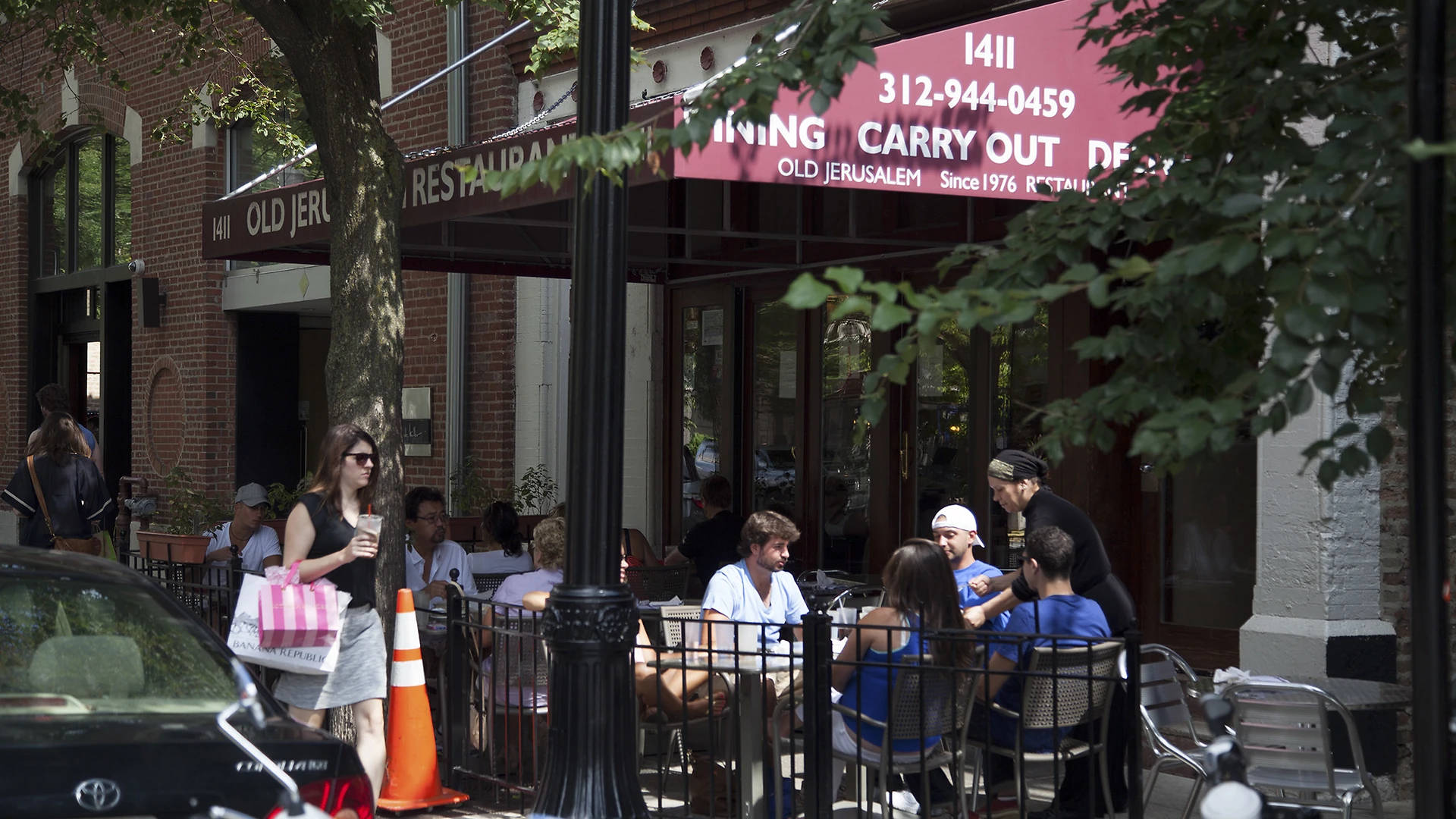
Old Jerusalem Restaurant has served Chicago for 50 years. Between December 2024 and August 2026, its direct online ordering website generated 1,623 orders and $72,000 in sales — nearly 17% of the restaurant’s total online revenue across every major ordering channel. That single channel out-earned Grubhub by more than $27,000 over the same period. For an independent, family-run kitchen, a direct ordering website turned out to be more than a convenience. It became one of the restaurant’s most productive sales channels.
This is the story of how a 50-year-old family restaurant stopped treating online ordering as a stack of tablets to babysit and started treating it as revenue it owns.
Managing online orders “the hard way”
For most of its history, Old Jerusalem handled online ordering the way many independent restaurants still do: with a pile of tablets, a set of third-party delivery apps, and a lot of manual work. Every platform had its own screen. Menus had to be updated one app at a time. Commission fees came out of every order. And none of it gave the restaurant a direct line to its own customers.
“Our family has been running this restaurant in Chicago for 50 years,” said owner Ahmed Awad. “We take pride in how we operate, and for a long time, we managed online orders the hard way. Multiple tablets, high third-party fees, no direct line to our customers, and constant manual updates just to keep the menu current. It was costing us time and money we couldn’t afford to keep losing.”
That description will sound familiar to a lot of operators. Third-party marketplaces are effective at putting a restaurant in front of new diners, but they come at a cost — commissions on every order and no ownership of the customer relationship. The more a restaurant leans on them, the less control it has over its margins and its repeat business. Each new tablet added during a busy stretch is one more screen for the staff to watch during a dinner rush, and one more place for an order to slip through.
What changed after switching to Orders.co
Old Jerusalem moved its online ordering onto Orders.co, consolidating its delivery apps and standing up a branded direct ordering website within one system.
“Since switching to Orders.co, our operations have become so much more organized,” Awad said. “Everything we need is in one place and the whole team picked it up quickly.”
The practical difference showed up fast. Order management got simpler because delivery-app orders and direct orders landed in the same place instead of across separate tablets. Menu updates happened once rather than app by app. And for the first time, the restaurant could communicate directly with the people ordering from it and see its sales and customer activity in a single view.
“The difference since implementing Orders.co has been immediate and visible,” Awad said. “Order management is simpler, communication with customers is direct, and we can track sales and customer activity in a way we never could before. Our staff learned the system quickly, which matters a lot when you’re running a tight, family-operated kitchen.”
For a small team, adoption speed is not a minor detail. A system the staff can’t pick up quickly doesn’t get used during service — it gets worked around. The fact that Old Jerusalem’s team learned the platform without a drawn-out ramp-up meant the operational benefits landed almost immediately rather than months later.
Awad’s own summary was: “I only wish we had made the switch sooner. Orders.co has been one of the best decisions we’ve made in 50 years of business.”
The numbers behind the direct ordering channel
Over the reporting period, Old Jerusalem’s direct ordering website did real volume:
- 1,623 direct online orders
- $72,556.23 in total sales
- 16.96% of the restaurant’s total online sales across all channels
- Roughly $44.71 in average sales per order
Two figures stand out.
First, the website generated more revenue than Grubhub over the same window — $72,000 versus $45,000 That is a difference of $27,000, or roughly 60% more sales through the restaurant’s own ordering channel than through an established third-party marketplace. A channel the restaurant fully controls out-earned one it does not.
Second, the direct channel didn’t just win on volume. Its average order value of about $44.71 was higher than both Uber Eats (about $41.49) and DoorDash (about $39.92). In other words, customers who ordered directly from Old Jerusalem tended to spend more per order than customers who arrived through the apps — a signal that a restaurant’s own audience is often its highest-value one.
These are not projections or estimates. They are the actual results the restaurant could see for the first time once every channel reported into one place. Before the switch, that kind of side-by-side comparison across Uber Eats, DoorDash, Grubhub, and its own website simply wasn’t visible — the data lived in separate apps that never talked to each other. Being able to see, at a glance, that the direct channel was outperforming a delivery app is itself part of the value: it lets an operator make decisions about where to focus marketing and where the real margin is.
Why direct online ordering matters for independent restaurants
Third-party delivery apps are best understood as discovery channels. They introduce a restaurant to new diners who might never have found it otherwise, and that reach has real value. The problem is what happens after the first order. On a marketplace, the customer effectively belongs to the app. The restaurant pays a commission, collects little customer data, and has no direct way to bring that diner back.
A direct ordering website changes that relationship. When a customer orders from the restaurant’s own site, the restaurant keeps more of the margin, owns the customer information, and can market to that diner again — through email, SMS, or loyalty rewards. Old Jerusalem’s numbers show what that can add up to over time: a channel that quietly became the third-largest source of online sales and out-earned an established delivery app.
The point for independent operators isn’t to walk away from the apps. It’s to treat them as the top of the funnel and to build a direct channel that turns app-discovered diners into repeat customers who order directly the next time. The apps are good at the first order. A direct ordering website is where the second, fifth, and fiftieth orders become profitable.
One system instead of many
Part of what made the shift work for Old Jerusalem was consolidation. Instead of running delivery apps, a website, and menu updates as three separate jobs, the restaurant now runs them from one platform. Orders.co brings third-party orders and direct orders into a single dashboard, keeps menus consistent across channels, and provides reporting and customer-marketing tools the restaurant didn’t have before — without requiring the team to tear out the systems it already relied on.
For a family-operated restaurant with a small staff, that consolidation is the difference between technology that adds work and technology that takes it away. Old Jerusalem didn’t just add a sales channel; it removed the daily friction of managing several disconnected ones.
See what a direct ordering channel could do for your restaurant
Old Jerusalem Restaurant spent five decades building a loyal following in Chicago. A direct online ordering channel gave it a way to turn that following into revenue it owns — more than $72,000 of it over the reporting period, with a higher average order value than the delivery apps and more sales than Grubhub.
If your restaurant is still managing online orders across a stack of tablets and paying commissions on every order, a direct ordering website may be the channel you’re missing. To see how Orders.co can consolidate your orders and power a branded direct ordering website for your restaurant, book a free demo with the Orders.co team.
Frequently Asked Questions
Orders.co’s direct online ordering website lets restaurants take orders straight from their own customers, so those orders are not subject to the per-order commissions that third-party delivery marketplaces charge. Restaurants keep more of the revenue from each direct order and own the customer relationship that comes with it.
No. Orders.co is built to run alongside a restaurant’s existing POS rather than force a full switch. It layers on top to consolidate delivery and direct orders, sync menus across channels, and add reporting and marketing, so restaurants can fix what isn’t working without ripping out systems that already work.
Orders.co is designed for small and mid-sized independent restaurants with roughly one to four locations and small chains of up to about 20 locations in the U.S. It is built for owner-operated and family-run businesses that feel the daily pain of tablet chaos, high delivery fees, and fragmented systems.
Orders.co integrates with the major third-party delivery marketplaces — including DoorDash, Uber Eats, Grubhub, and ezCater — and routes their orders into a single dashboard alongside a restaurant’s direct online orders. Instead of staff watching a separate tablet for each app and re-entering orders by hand, every channel appears in one place, which reduces errors and speeds up service.


