


Table of contents
- Why loyalty matters more now
- Moving beyond the basic punch card
- What guests actually want from restaurant customer rewards programs
- Data is the new currency: personalization and AI
- Modern models: points, tiers, subscriptions, and more
- Gamification and values-based rewards
- Frictionless loyalty: make it easy or it will not work
- Restaurant loyalty apps, delivery, and the “everywhere” guest
- Learning from the best restaurant rewards programs right now
- Corporate and group ordering: a bigger loyalty opportunity
- How to measure loyalty success (simple metrics)
- Common mistakes (and how to avoid them)
- Choosing a restaurant loyalty platform and providers
- Takeaway
- FAQ: Restaurant Loyalty Programs
- More Helpful Reads
Restaurants are changing fast, and keeping regular guests matters more than ever. The future of restaurant loyalty programs is digital, more personal, and easier to use. If you are trying to improve restaurant customer loyalty, a strong restaurant customer loyalty program is no longer a “nice extra”—it can be a major driver of long-term profit.
Many restaurants are moving away from older reward models and rebuilding their programs around convenience, better data, and stronger guest relationships. Below are the biggest trends shaping restaurant rewards programs today and what they mean for the next few years.
Why loyalty matters more now
Food costs, labor, and delivery fees keep rising. Guests also have more choices than ever, and it is easy to switch to another brand after one bad experience. A well-designed loyalty rewards program for restaurants can help you:
- Increase repeat visits by giving guests a clear reason to return
- Grow average order size with smart add-ons and upgrades
- Reduce marketing waste by messaging loyalty members directly
- Build habit so your restaurant becomes the “default choice”
In short, restaurant loyalty is about making it easy—and rewarding—for people to choose you again.
Moving beyond the basic punch card
A paper punch card or a simple restaurant loyalty card can still work for some small shops, but most guests now expect rewards that follow them everywhere: dine-in, takeout, drive-thru, and online ordering. That is why many loyalty card programs for restaurants are going digital.
If you are upgrading an older system, start with your “technology backbone.” A modern restaurant loyalty platform can track visits, orders, and redemptions in one place. When it connects to your POS and customer tools (often described as the best restaurant CRM software for small businesses), you can run better offers and avoid manual tracking.
Digital does not have to be complicated. The best restaurant loyalty schemes feel simple to the guest:
- Sign up in under a minute
- Earn rewards automatically
- Redeem in a couple of taps (or at checkout with a phone number)
Want to see what a modern loyalty program could look like for your brand? Book a demo with us
What guests actually want from restaurant customer rewards programs
When people join restaurant customer rewards programs, they are usually looking for three things:
- Clear value: They understand what they earn and how quickly they can earn it.
- Flexibility: They can redeem for different rewards (free items, upgrades, delivery perks, limited-time deals).
- Recognition: They feel noticed—birthday rewards, “welcome back” offers, and perks that match what they order.
This is why many of the best restaurant loyalty programs focus less on big coupons and more on steady value plus small moments that feel personal.
Data is the new currency: personalization and AI
To compete with the best food rewards programs, restaurants are using data to make rewards more relevant. Because privacy rules are stricter, relying on third-party data is becoming less useful. Instead, many brands focus on first-party data: information you collect directly from your own channels (POS, online orders, reservations, your app).
Some brands also use zero-party data, which is simply information guests choose to share—like dietary needs, favorite items, birthdays, or preferred locations. When you combine these, you can create more helpful offers without guessing.
Here are two simple ways data changes loyalty:
- Smarter timing: You can estimate when a guest might visit again and send a reminder at a helpful moment (not spam).
- Better fit: You can send rewards that match what a person actually likes—like a free side for someone who always orders a combo, or a free vegan appetizer for a guest who orders plant-based meals.
Many people call this “AI-driven personalized rewards.” What it really means is: using patterns in orders to pick a reward that is more likely to be used.
Modern models: points, tiers, subscriptions, and more
If you are looking for restaurant rewards program ideas, you do not have to stick with “spend a dollar, earn a point.” The future is more flexible. Here are common models you will see more often in the top restaurant loyalty programs:
- Points programs: Easy to understand. Great for quick-service and high-frequency visits.
- Tiered programs: Useful when you want to reward your best guests and create status (Silver/Gold/Platinum). This can increase restaurant customer loyalty by giving people a goal.
- Subscriptions: Guests pay monthly for perks like unlimited coffee, free delivery, or a monthly credit. This creates steady revenue and encourages repeat visits.
- Experience rewards: Early access to new menu items, priority seating, chef tastings, or members-only events.
Choosing the right model depends on your concept. A QSR might keep rewards fast and simple. A full-service brand might focus on experiences and VIP treatment.
Gamification and values-based rewards
Many restaurant loyalty programs ideas now borrow from games, because it keeps people engaged. Simple examples include:
- Badges for trying new categories (breakfast, lunch, dinner)
- Streak rewards for visiting once per week for a month
- Limited-time challenges (try a new menu item and earn bonus points)
Another growing approach is values-based rewards. Guests may like the option to donate points to a local cause or support a community project. It does not replace food rewards, but it can strengthen emotional connection.
Example marketing strategy: Starbucks has promoted reusable-cup behavior by combining a small, instant discount with a loyalty bonus: Customers at participating stores in the U.S. and Canada who bring any clean, personal cup will receive a $0.10 discount on their beverage, and in the U.S., Starbucks Rewards members will receive 25 Bonus Stars.* This kind of offer works because it ties a brand value (sustainability) to a simple action, and it gives loyalty members an extra reason to identify themselves at checkout.
Source: Starbucks
Frictionless loyalty: make it easy or it will not work
Even the best loyalty rewards program for restaurants will struggle if it is hard to use. The future of loyalty is “frictionless,” meaning fewer steps for the guest and fewer problems for your team.
Two improvements are becoming more common in food and beverage loyalty programs:
- Mobile wallet passes: Guests save a digital pass in Apple Wallet or Google Pay and can scan quickly. This works well if you do not want a full app.
- Card-linked loyalty: Guests link a payment card to their profile and earn points automatically when they pay. This reduces the “I forgot to scan” problem.
The goal is the same: make earning and redeeming feel effortless across every channel.
Restaurant loyalty apps, delivery, and the “everywhere” guest
Today’s guest might dine in one day, pick up the next, and order delivery on the weekend. Loyalty has to work across these behaviors. If points only work in-store, people lose interest when they order online.
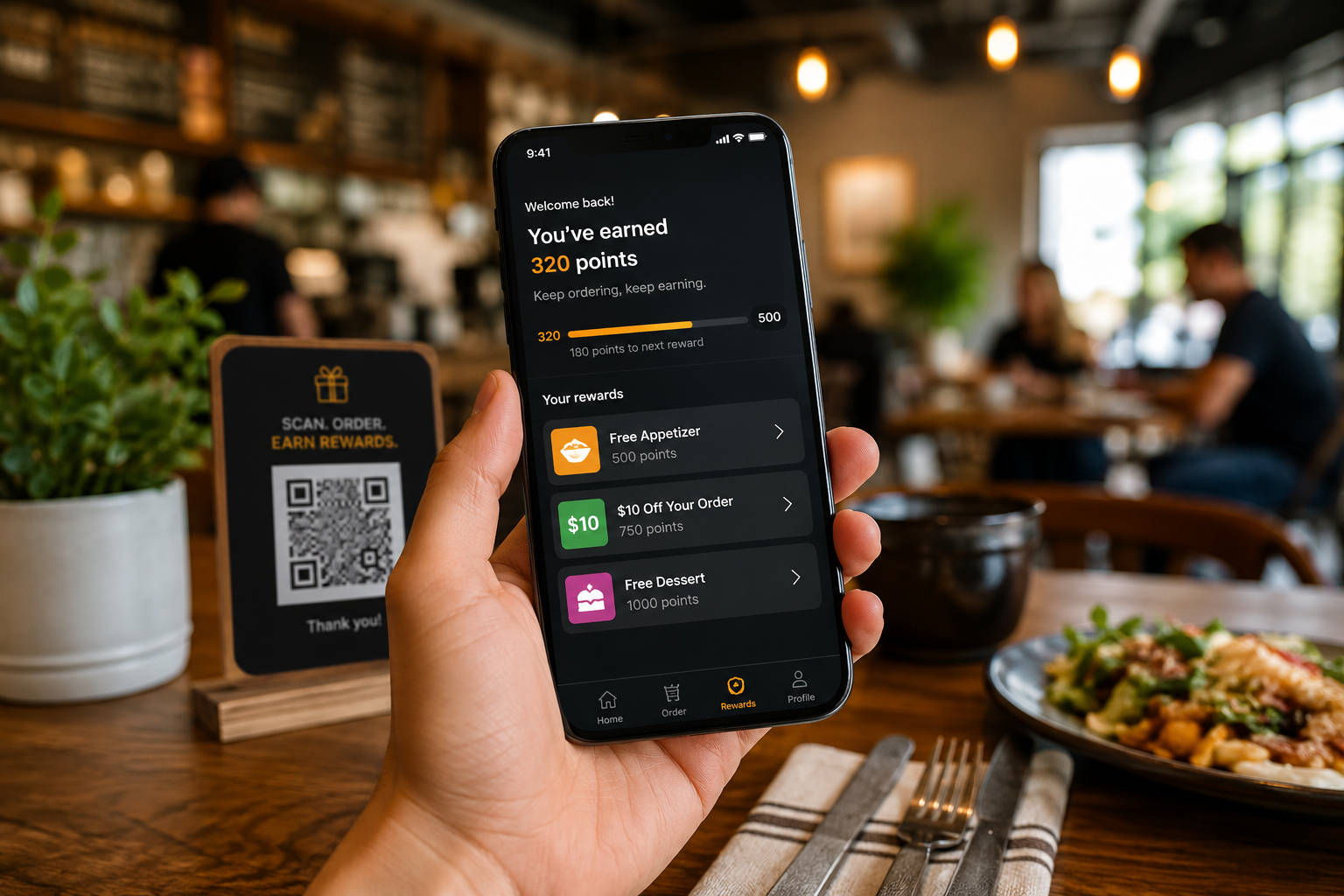
This is one reason many brands invest in restaurant loyalty apps. A good app can store a loyalty ID, show progress to the next reward, and offer quick reorder options. It also helps you communicate with members directly (push notifications and in-app offers).
Delivery adds complexity. The best loyalty programs food delivery companies often tie rewards to reduced fees, faster service, or member-only deals. Restaurants can compete by making sure loyalty works with their own online ordering, and by exploring integrations that allow earning and redeeming on delivery orders where possible.
Learning from the best restaurant rewards programs right now
If you are researching the best restaurant rewards programs right now, you will notice a few patterns. The chain restaurants with the best rewards tend to:
- Keep rules simple and visible
- Offer rewards that are easy to use (not buried in fine print)
- Use limited-time offers to change behavior (like “try lunch this week”)
- Make redemption fast at checkout
The best QSR loyalty programs usually win on speed: order ahead, pay in the app, earn points, redeem in seconds. If you are looking at top chain restaurants for loyalty discounts, focus on the system design, not just the discount size.
It can also help to review lists of the best restaurant loyalty programs and best food loyalty programs in your segment, then borrow what fits your guests.
Corporate and group ordering: a bigger loyalty opportunity
More brands are exploring corporate dining solutions with loyalty program features. Offices and teams often place larger, repeat orders, which makes them a valuable loyalty audience.
Examples of corporate-focused loyalty features include:
- Company accounts that earn points faster
- Easy invoicing and monthly summaries
- Perks for frequent group orders (delivery credits, free catering add-ons)
For restaurants, this can become a high-value version of restaurant customer loyalty because the buying pattern is steady and predictable.
How to measure loyalty success (simple metrics)
You do not need a large team to measure results. Start with a few clear numbers:
- Enrollment rate: How many guests join?
- Active members: How many earned or redeemed in the last 30–90 days?
- Repeat rate: Do members visit more often than non-members?
- Redemption rate: Are rewards being used (a sign people care)?
- Incremental revenue: Do members spend more over time?
Also watch out for the “discount trap.” If rewards are too generous, you may train guests to only buy with a deal. The best restaurant rewards programs balance value for the guest with profit for the business.
Common mistakes (and how to avoid them)
- Hard sign-up: Too many fields, unclear benefits, or a slow process.
- First reward is too far away: Give a quick win early to build momentum.
- Staff is not trained: The team should be able to explain the program in one sentence.
- Rewards are confusing: Keep earning and redemption rules simple.
- Poor integrations: If POS, online ordering, and loyalty do not sync, you will have tracking and customer service issues.
Choosing a restaurant loyalty platform and providers
You do not have to build loyalty from scratch. There are many restaurant loyalty program providers and other “awesome loyalty rewards platforms for restaurants” that can help you launch, manage, and improve performance.
When comparing tools, look for:
- Strong POS and online ordering integrations
- Support for digital loyalty cards and mobile wallet options
- Easy segmentation (so you can message different groups)
- Testing tools (A/B testing or simple offer experiments)
- Clear dashboards and reporting
If you are keeping a physical option, make sure your restaurant loyalty card approach still connects to the same system so reporting stays accurate.
Takeaway
Restaurant loyalty is no longer just “buy ten, get one free.” The top restaurant loyalty programs of the future will be digital, personal, and simple to use. They will work across in-store and online channels, and they will rely on better data to send better offers.
By learning from the best restaurant loyalty programs, using practical restaurant rewards program ideas, and choosing the right restaurant loyalty platform, you can build stronger restaurant customer loyalty and protect your long-term growth.
FAQ: Restaurant Loyalty Programs
A restaurant loyalty program is a rewards system that thanks guests for repeat visits or orders. It can use points, tiers, subscriptions, or a digital loyalty card to encourage customers to come back.
The best restaurant loyalty programs are easy to join, easy to understand, and easy to redeem. They also offer rewards that feel valuable without relying on constant deep discounts.
Points-based programs are simple and fast. Tiered programs can create status and can be great if you want to reward your most frequent guests with better perks.
Yes—when the program is simple, the rewards are achievable, and the experience is smooth. Good programs usually improve repeat visits and long-term spending.
Not always. Many brands do well with mobile wallet passes or phone-number-based loyalty. A restaurant loyalty app can help if you want ordering, messaging, and loyalty in one place.
Start with a welcome reward, a birthday offer, and a clear path to the first reward. Then add referrals, bonus-point days, or challenges that promote new menu items.
Card-linked loyalty lets guests connect a payment card to their profile, so they earn points automatically when they pay. It reduces missed points and speeds up checkout.
Choose a restaurant loyalty platform that integrates with your POS and online ordering, has clear reporting, and makes it simple to build and test offers. Also check training and support from the provider.
Yes, especially through your own online ordering. Some setups can also support loyalty on delivery depending on integrations. This is why many people compare programs to the best loyalty programs food delivery companies.
They can drive larger repeat orders from offices and events. Loyalty features can reward frequent company ordering and build long-term relationships with corporate customers.


