


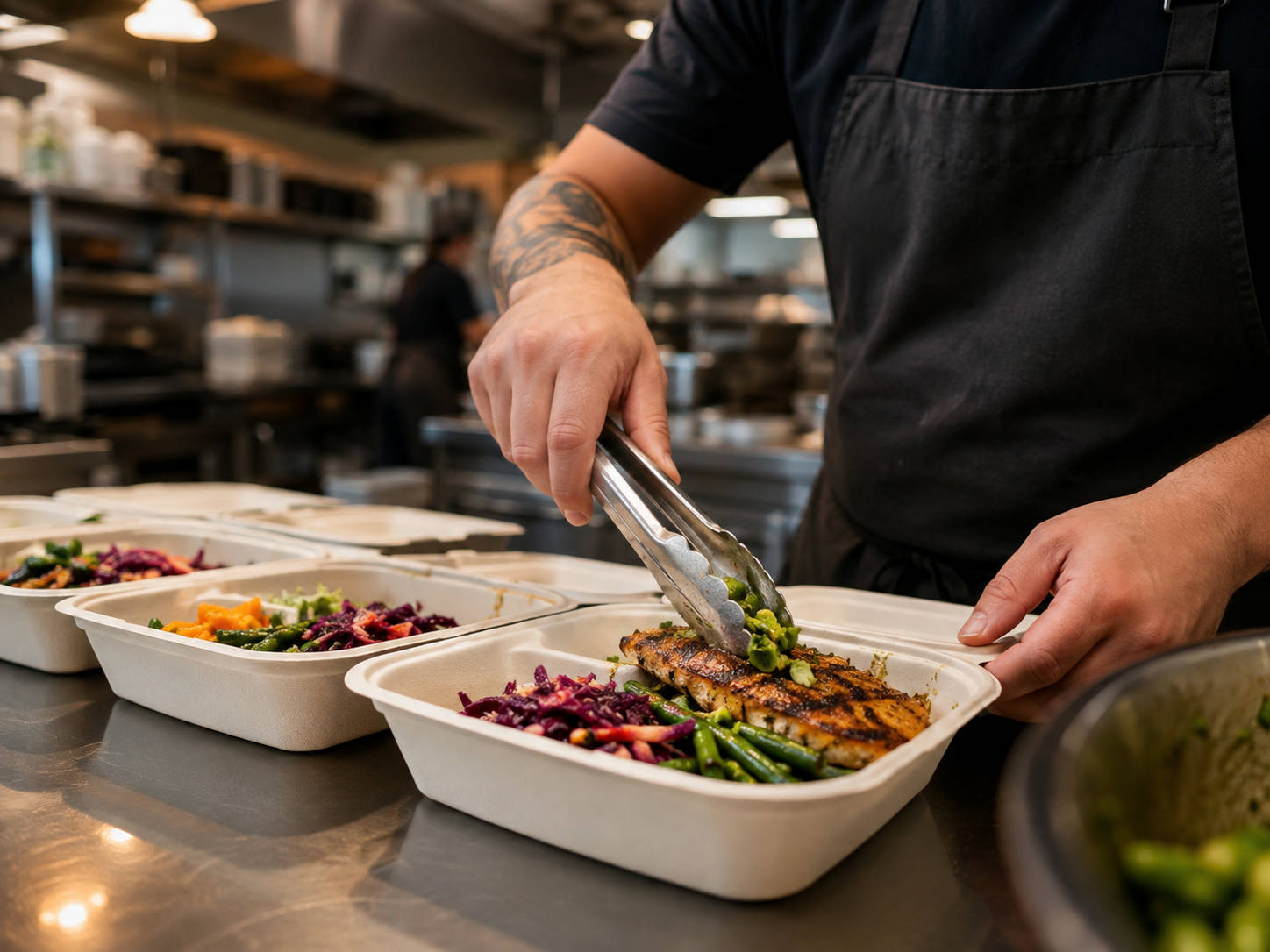
Your takeout menu is probably just a copy of your dine-in menu. That’s the problem worth fixing.
Kitchens design food to reach a table within seconds of leaving the pass. Takeout throws that assumption out. A dish can sit in a closed container for 10, 20, even 30 minutes before anyone eats it. In that window, crispy coatings soften, sauces soak into bread, hot and cold ingredients bleed together, and a plate that looked perfect at the pass arrives home as a different meal.
The recipe didn’t change. The journey did.
Uploading that same menu to an online ordering system and calling it a takeout menu skips right past this reality. Takeout isn’t a smaller version of dine-in. It’s its own occasion, and it deserves intentional decisions about which dishes, what packaging, how the menu is built, and how customers order.
What Makes a Good Takeout Menu?
A good takeout menu prioritizes dishes that hold their taste, texture, temperature, and appearance during transport. It uses packaging suited to each dish, simplifies customization where that helps consistency, and gives customers a convenient digital ordering and pickup experience. In short, it’s designed for how the food is actually eaten, not just how it leaves the kitchen.
That comes down to four things: taste, texture, temperature, and how the dish looks when the container opens.
None of that means lowering standards. It means applying the same standards to different conditions. The National Restaurant Association’s 2025 packaging research found that 90% of off-premises customers say they’d likely order a wider variety of restaurant foods if better packaging helped preserve temperature, taste, and quality closer to the dine-in experience. Customers want the range. They just want it to arrive intact.
The point worth holding onto: the customer’s experience doesn’t end when the bag leaves your counter. It ends when they open the box.
Try the 20-Minute Takeout Test
Here’s the most useful thing you can do this week, and it costs almost nothing. Order your own food the way a customer would, and treat it like a real takeout order.
- Prepare the dish exactly as you would for a pickup order.
- Package it in your standard takeout packaging.
- Put it in a bag.
- Leave it alone for about 20 minutes.
- Open it and eat it.
Then ask the honest questions:
- Is it still hot enough?
- Is anything that should be crispy still crispy?
- Did steam collect inside the container?
- Did the sauce migrate somewhere it shouldn’t be?
- Did cold ingredients warm up?
- Did the bread go soggy?
- Did everything slide around in transit?
- Does it still look like something you’d want to eat?
- Would a customer need instructions to reheat or assemble it?
The insight is simple. Don’t judge the dish at the kitchen pass, where it looks perfect. Judge it where the customer experiences it, at home after a car ride. That’s the version they’ll remember, and the version they’ll decide to reorder or not.
Some Dishes Need a Takeout Version, Not a Takeout Box
A dish that travels poorly doesn’t have to come off the menu. Often it just needs to be served differently. The habit worth building is asking “How should this dish travel?” before “What container fits it?”
- Fried food: Trapped steam turns crisp into soft. Vented packaging lets heat escape where that helps.
- Burgers: Consider whether tomatoes, sauces, or other moisture-heavy ingredients should be adjusted or packed apart so the bun holds up.
- Nachos: Chips and wet toppings arrive better packed separately and combined at home.
- Salads: Dressing on the side keeps greens from wilting on the way.
- Ramen: Broth and noodles in separate containers, combined when the customer’s ready to eat.
- Tacos: Packaging that keeps fillings from soaking through the tortilla goes a long way.
- Desserts: Hot and cold components apart, so neither ruins the other.
None of these dishes is inherently “bad for takeout.” Fried chicken, tacos, and ramen can all travel beautifully. It comes down to preparation and packaging, not the cuisine.
Your Takeout Menu Doesn’t Have to Include Everything
More menu items doesn’t automatically mean more customer choice. A dish that shines in the dining room can disappoint after 20 minutes in a bag, and a disappointing takeout order does more damage than a shorter menu ever would.
You have more options than “keep everything” or “cut it.” You can:
- Feature the bestsellers that travel well.
- Quietly remove items that consistently disappoint off-premises.
- Modify certain dishes specifically for takeout.
- Create items that only exist for takeout.
- Build bundles around the occasions people actually order for.
That last one is where the opportunity sits. The National Restaurant Association’s off-premises research points to real consumer interest in meal bundles, family meals, and expanded off-premises offerings. A “Friday Dinner for Two,” “Family Taco Night,” “Pizza + Salad Bundle,” “Office Lunch Pack,” or “Game Night Wings” all sell something more specific than an entree. You’re designing around the occasion, not just listing items and hoping people build a meal themselves.
Your Digital Menu Should Match the Takeout Experience
How a customer orders should line up with how the food is served. That means the digital menu might need different item availability, modifiers, bundles, descriptions, photos, prices where appropriate, promotions, or takeout-specific categories depending on the channel.
The operational problem shows up fast. Building a better takeout menu gets painful if every adjustment has to be entered by hand into several platforms. No operator should have to choose between giving every channel the exact same menu or losing hours a week maintaining separate versions manually.
This is where menu-management technology earns its place. Tools such as Orders.co’s Master Menu Management System can make this easier by giving operators one place to manage menu information across connected ordering channels, rather than rebuilding every change by hand. It keeps items, pricing, and availability consistent across the platforms it’s connected to, and Orders.co also offers a branded direct online ordering website where you can present your menu and take orders directly. The value isn’t the software for its own sake. It’s the time back and fewer places for a menu change to go wrong.
Delivery Has Its Own Logistics
Takeout is one occasion. Delivery is another, and it comes with a question takeout doesn’t: who’s driving the order to the customer? Plenty of restaurants keep their own drivers, which works well until a rush hits and everyone is already out.
That’s the gap Orders.co’s AI Dispatch fills. It connects to your POS, so when an order comes in and no in-house driver is free, staff can hand it to AI Dispatch. It automatically matches the order with an Uber Direct or DoorDash driver, weighing distance, driver rating, and delivery cost, so no one at the counter has to compare options by hand. It’s a backup for when your own drivers are tied up, not a replacement for them or for the delivery apps.
The Goal Isn’t Three Restaurants
You’re not trying to run three separate restaurants for dine-in, takeout, and delivery. You’re recognizing that customers experience the same food differently depending on where and how they eat it, and giving each occasion a fair shot at being good. Dine-in, delivery, and takeout can all be strong channels. The difference is intention. A restaurant that spends months perfecting a recipe can spare a few minutes making sure that recipe survives the trip home.
Your kitchen may finish the dish. But for a takeout customer, the meal isn’t finished until they open the box.
Frequently Asked Questions
Food that holds its intended temperature, texture, structure, and flavor through the normal travel time for that restaurant’s customers. A dish that tastes right the moment it leaves the kitchen but softens or slides apart on a 20-minute ride isn’t well suited to takeout as prepared. Preparation and packaging matter as much as the recipe.
Not necessarily a completely separate one. Most restaurants do better by selectively adjusting availability, preparation, packaging, bundles, and menu descriptions based on what holds up off-premises. The goal is a menu that reflects how the food actually arrives, not a second restaurant to run.
Pizza, grain bowls, many pastas, braised and saucy dishes, and properly packaged sandwiches often travel well. But there’s no universal list. Travel time, preparation, and packaging matter as much as the cuisine. A crispy dish can arrive great or soggy depending entirely on the container.
Test dishes after a realistic travel time, choose packaging for the specific dish rather than whatever’s on the shelf, separate components that don’t mix well in transit, simplify items where needed, and track customer feedback so the same complaints don’t repeat. Small changes usually protect quality more than menu overhauls.


