


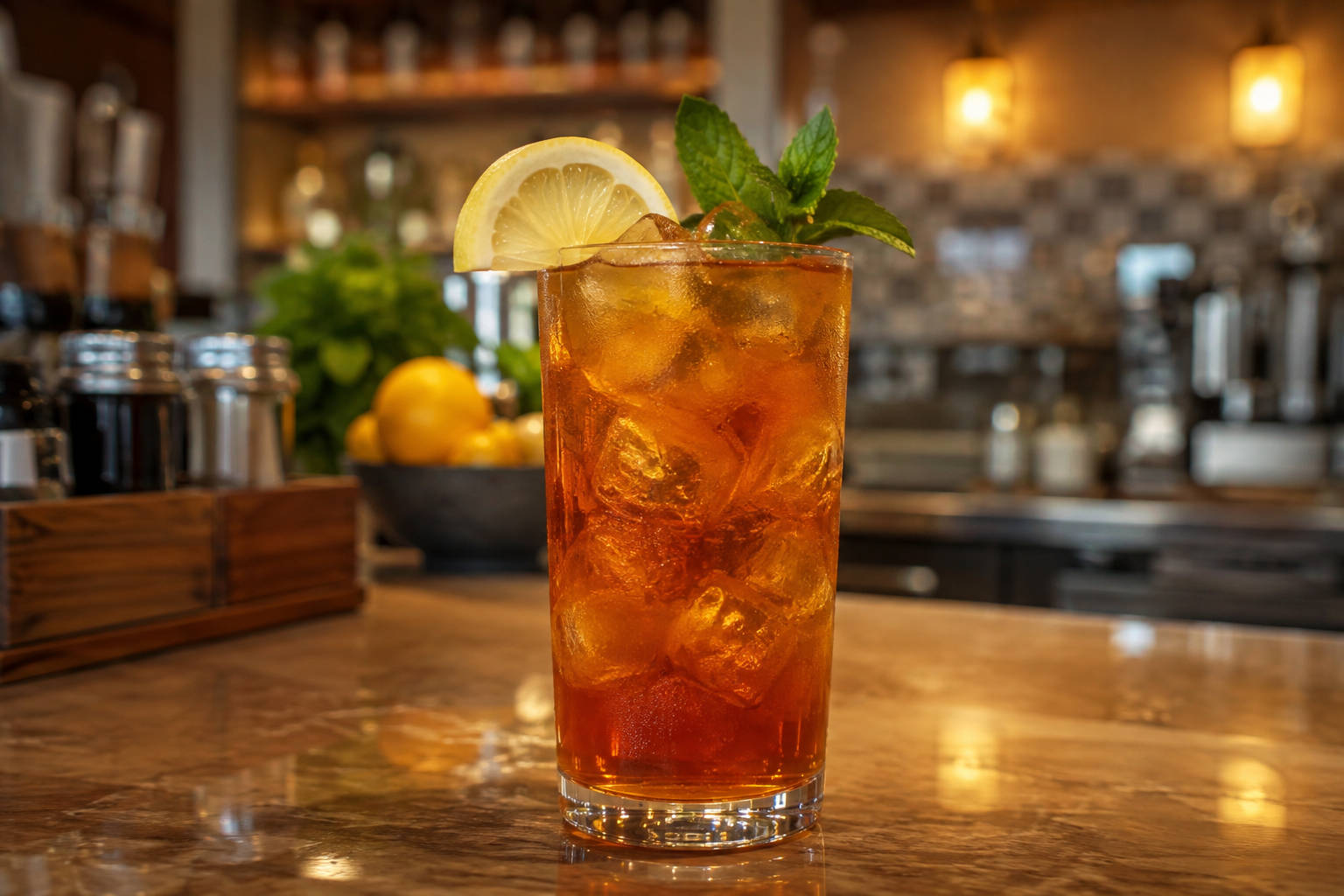
- Delivery has a beverage problem
- A drink can do more than round out the meal
- Put drinks where customers actually see them
- Stop selling only the drinks customers already have at home
- Packaging is part of the product
- Use bundles to make the add-on feel natural
- Test your beverage attachment rate
- Is your delivery menu leaving drink revenue on the table?
- Making it manageable across channels
- FAQ
- More Helpful Reads
You’ve probably spent real time trying to lift the value of an online order. A bigger combo. An extra side. A dessert at checkout. A free-delivery threshold set a few dollars above your average ticket. Most operators have run some version of that math.
One category rarely gets the same attention: the drink.
A 2026 Restaurant Beverage Trends report from the National Restaurant Association, published August 25, 2026, found that 83% of delivery customers say they’d include beverages in their delivery orders more often if better packaging let restaurants offer more options. Among Gen Z and millennial customers, that number rises to 89%.
Read that again from a revenue angle. A large majority of your delivery customers are telling you they’re willing to add a drink. They’re not asking for a discount. They’re asking for a reason and a better experience. Yet on most delivery menus, beverages sit in a forgotten section at the bottom, priced and photographed like an afterthought.
So the question worth sitting with this week: if customers are this willing to add drinks, why aren’t more of your delivery orders capturing that spend?
Delivery has a beverage problem
Attaching a drink is easy at the counter. Someone orders, the screen prompts a size, a cashier asks if they want a drink with that, and it’s done. Off-premises, most of that disappears.
A few things get in the way:
- The customer already has soda, water, or juice at home, so a standard canned drink feels like paying a premium for something already in the fridge.
- Cups leak. Lids pop. Ice melts over a 25-minute drive and waters down whatever was in there.
- Hot and cold items ride together in the same bag.
- Drinks are awkward for drivers to carry alongside food.
- The beverage list is thin, generic, or buried three scrolls down.
None of that is the customer’s fault, and it’s worth being clear about that. People aren’t skipping drinks because they don’t want them. They’re skipping drinks because the delivery version of the experience often isn’t worth it. That’s a merchandising and execution problem, which is good news, because those are problems you can actually fix.
The National Restaurant Association’s finding points straight at one of the biggest levers. When packaging makes drinks travel well, both sides get more comfortable: customers trust the order will arrive intact, and operators feel better about promoting beverages in the first place. The same report found that two-thirds of restaurant operators say they’d promote beverages more heavily for delivery if packaging improvements made transportation easier.
A drink can do more than round out the meal
It helps to stop thinking of beverages as a commodity add-on and start treating them as menu items that carry their own margin and their own appeal.
A specialty drink is one of the lowest-friction additions on the menu. It doesn’t require the customer to commit to a second dish. It can feel like a small treat without much cost or guilt. And a good signature beverage does something a side of fries can’t: it reinforces what your restaurant actually is.
Consider the range: a house lemonade, an agua fresca, horchata, a mango lassi, Thai iced tea, Vietnamese iced coffee, a fruit tea, cold brew, a smoothie, a seasonal spiced cider, and a house-brewed iced tea. None of these belongs only to coffee shops or big chains. An Indian restaurant, a taqueria, a Vietnamese spot, a Southern kitchen, and a smoothie-forward café each have a natural signature drink hiding in the cuisine.
You don’t need an elaborate beverage program to benefit from this. A short, deliberate lineup that fits your food will usually outperform a long, generic one.
The NRA report also found that 72% of consumers see restaurants as a good place to discover beverages they’ve never tried. Discovery is exactly what a delivery menu can support if the drink is presented as something worth discovering.
Put drinks where customers actually see them
Your online menu is a sales environment, not a filing cabinet. Assuming customers will scroll to a “Beverages” section at the very bottom is optimistic. Most won’t.
You’ve likely already worked on menu engineering elsewhere, so apply those same instincts to drinks specifically:
- Feature a signature beverage near your best-selling entrées, not just in its own section.
- Add a short recommendation (“Goes well with the birria tacos”) where your platform allows it.
- Build the drink into combos so it’s part of the default order path.
- Surface beverages at the cart review, when the customer is already committed and open to one more thing.
- Rewrite flat listings. “Iced Tea, $3.99” sells nothing. “House-brewed hibiscus iced tea, lightly sweet, brewed fresh daily” gives someone a reason.
- Use real photography. A good photo of a drink does more work than a paragraph.
The goal isn’t to pressure anyone. It’s to make a relevant add-on visible at the moment it makes sense.
Stop selling only the drinks customers already have at home
This is the sharpest lever, so it’s worth being blunt about it.
A diner will hesitate to pay restaurant pricing plus delivery fees for a canned soda identical to the twelve-pack in their pantry. The value equation changes the moment the drink is something they can’t easily recreate:
- House-made or brewed in-house
- Tied to your cuisine
- Customizable (sweetness, milk, ice, add-ins)
- Seasonal or limited
- Genuinely nice to look at
A customer may skip the canned soda and happily pay for an agua fresca, a Thai iced tea, a mango lassi, a cold brew, or a house lemonade that feels like part of the meal they ordered.
Pick three to five delivery-friendly drinks worth emphasizing. Ask two questions of each: does it survive the trip, and is it something the customer couldn’t just grab from their own fridge? The drinks that pass both are the ones to feature.
Packaging is part of the product
Back to that 83% finding, because it earns a section of its own. For delivery, packaging isn’t only an operational line item. It decides whether a drink can realistically be sold at all.
The practical checklist most operators end up working through:
- Leak resistance and a lid that actually stays on
- Tamper-evident seals, which also build trust
- Cups that don’t tip over in the bag
- Drink carriers for multi-beverage orders
- Separating hot and cold so nothing arrives lukewarm
- Managing ice and dilution (some operators bag ice separately or size up the cup)
- Temperature retention for coffee and hot teas
Better packaging quietly changes the economics on both sides. It makes you comfortable promoting more drinks, and it makes customers comfortable ordering them. Test options on real delivery routes before committing, and stay skeptical of any packaging product that promises to fix everything at once.
Use bundles to make the add-on feel natural
Bundling turns “should I add a drink?” into a decision the customer doesn’t have to make at all.
Instead of listing a burger at $14 and hiding the drink somewhere else entirely, offer:
- Burger + fries + house lemonade
- Taco Night for Two: six tacos, chips, salsa, and two aguas frescas
- Lunch Combo: entrée + side + choice of iced tea or lemonade
Bundling doesn’t have to mean deep discounts. A lot of the value is simply removing a decision. A combo that’s priced fairly and saves the customer three taps can outperform an à la carte menu that costs the same. Discount when the math genuinely calls for it, not by reflex.
Test your beverage attachment rate
The metric to build all of this around is beverage attachment rate. In plain terms, it’s the percentage of eligible orders that include at least one drink. If 100 delivery orders come in and 22 include a beverage, your attachment rate is 22%.
It’s a simple number, and it gets useful the moment you start comparing it:
- Delivery vs. pickup
- Direct ordering vs. third-party marketplaces
- Lunch vs. dinner
- Weekday vs. weekend
- One location vs. another
- Before vs. after a menu change
- Standard drinks vs. signature beverages
- Standalone drinks vs. bundled ones
Then run small tests and watch what moves:
- Move your signature beverages higher on the menu.
- Add strong drink photography.
- Offer a meal-plus-drink bundle.
- Introduce one delivery-friendly signature drink.
- Add a drink suggestion at the cart stage.
- Improve packaging, then compare complaint and refund rates alongside attachment rate.
Treat these as experiments, not guarantees. Change one thing, give it enough orders to mean something, and let the data tell you what your customers actually respond to.
Is your delivery menu leaving drink revenue on the table?
A quick self-audit you can run this week:
- Can customers find your drinks without scrolling through the entire menu?
- Do you offer anything they probably don’t already have at home?
- Are your best drinks actually photographed?
- Can someone add a beverage easily from an entrée or a bundle?
- Does your packaging survive a 20-to-30-minute delivery?
- Do you know which drinks actually sell online, by channel?
- Are your beverage offerings consistent across every ordering channel?
If you hesitated on more than a couple of those, that’s your starting list.
Making it manageable across channels
Testing a beverage strategy sounds tidy until you remember most restaurants run several ordering channels at once. Move a drink up the menu, add a photo, launch a combo, and suddenly you’re making the same change on DoorDash, Uber Eats, Grubhub, and your own site, one dashboard at a time. That friction is why a lot of good menu ideas never get tested.
This is where centralized menu management earns its keep. With Orders.co, you can update menus across your online ordering channels from one place, keep beverage names, descriptions, and pricing consistent everywhere, and use reporting to see how those changes affect orders. When testing is easy, you actually run the tests, which is the whole point.
Your next revenue opportunity may not require another entrée or another discount. It might start with making the right drink easier to discover, order, and deliver, then watching the numbers to see what worked.
FAQ
Focus on drinks customers can’t easily get at home, feature them near popular entrées instead of a bottom-of-menu section, bundle them into combos, and use real photography with specific descriptions. Then track which drinks sell by channel and put more weight behind the winners.
Use leak-resistant cups with secure, tamper-evident lids, keep drinks stable with carriers, separate hot and cold items, and manage ice and dilution (some operators bag ice separately). Test packaging on real delivery routes before rolling it out.
Usually because the delivery version isn’t worth it, not because they don’t want a drink. Standard sodas compete with what’s already in the fridge, ice melts in transit, cups leak, and the beverage list is often buried at the bottom of the menu. Fix the experience — better packaging, drinks they can’t get at home, smarter placement — and attachment tends to follow.
Put the drink where the decision is natural: next to the entrée, inside a combo, or as a suggestion at cart review. A specific description and a real photo do more than a discount. The aim is to make a relevant add-on visible at the right moment, not to pressure anyone.


