


- The First Order Is Only the Beginning
- Why Don’t First-Time Customers Automatically Become Regulars?
- Why Does the Second Order Matter So Much?
- Step 1: Capture the Customer Relationship
- Step 2: Give First-Time Customers a Reason to Order Directly Next Time
- Step 3: Build a Loyalty Program That Turns the First Order Into a Habit
- Step 4: Use a Simple Welcome Flow After the First Order
- Step 5: Use Behavior-Based Marketing Instead of Random Coupon Blasts
- Step 6: Use AI and Automation to Make Retention More Hands-Off
- Step 7: Make the Direct Reorder Path Easy
- Step 8: Train Staff to Promote Loyalty and Direct Ordering
- Step 9: Track Whether First-Time Customers Are Actually Coming Back
- Common Mistakes Small Restaurants Make With Customer Retention
- A Simple 30-Day Plan to Turn First-Time Customers Into Regulars
- Frequently Asked Questions
- More Helpful Reads
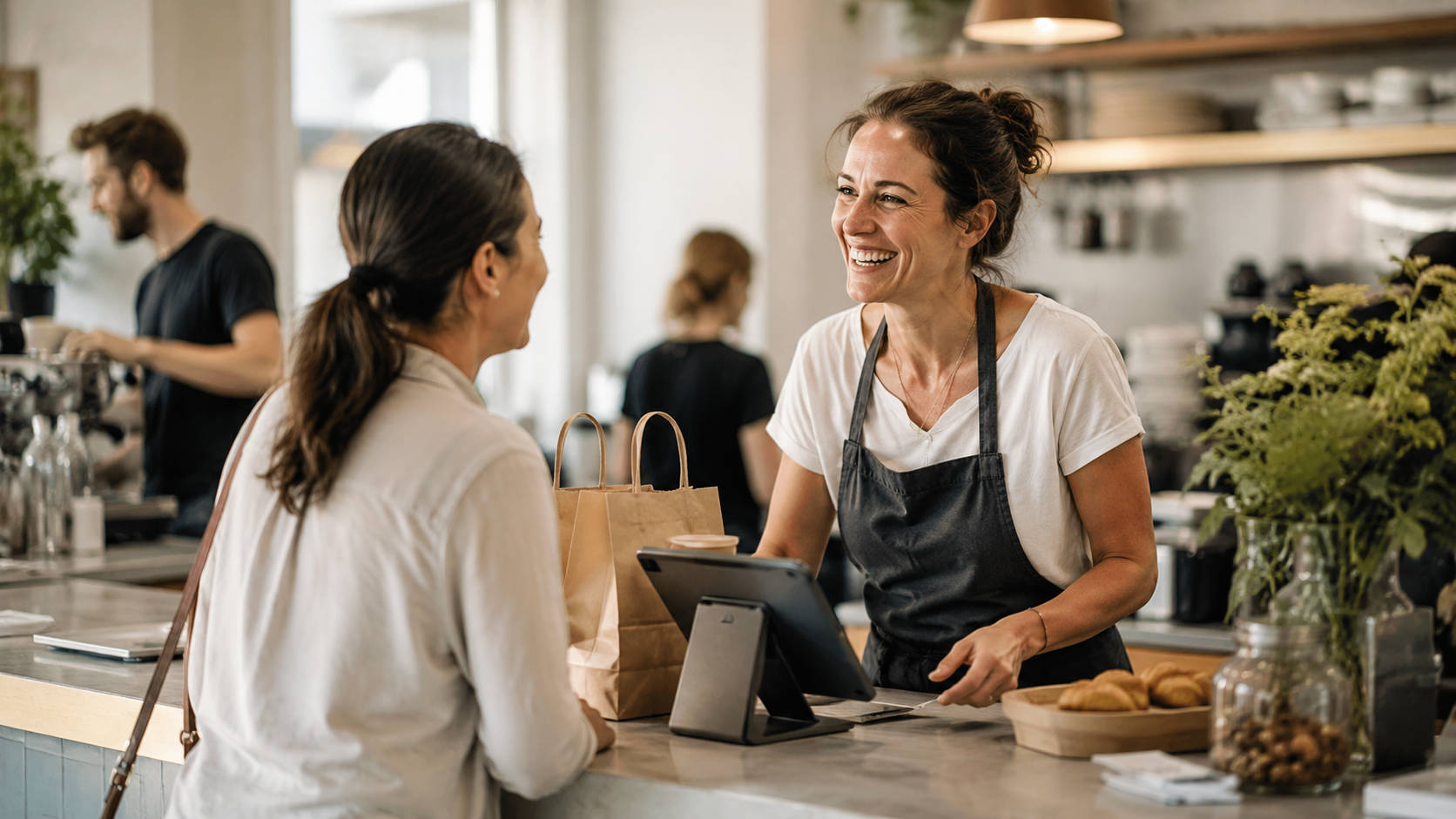
The First Order Is Only the Beginning
It is a pattern almost every small restaurant recognizes. A new customer finds you through DoorDash, Google, Instagram, or a friend. They place one order. The food is good. And then — nothing. No follow-up, no loyalty invite, no direct ordering link, no reason to choose you again next week. The real challenge is how to turn first-time customers into regulars who keep coming back.
Most operators pour energy into the first order because it feels hardest. But the real profit is in the second, fifth, and twentieth. A first-time customer is a transaction. A repeat customer is predictable revenue.
Small restaurants do not just need more first-time customers. They need a system that makes the second order more likely.
That system owns the customer relationship, collecting basic customer data, making reordering easy, rewarding return visits, and following up at the right time.
Why Don’t First-Time Customers Automatically Become Regulars?
A great first experience helps, but it does not guarantee a return. Even people who loved your food get pulled toward whatever appears at the top of an app the next time they are hungry.
Why do they slip away?
- Delivery apps make the marketplace more memorable than the restaurant — the diner remembers ordering “on Uber Eats,” not from you.
- Many restaurants never collect names, emails, phone numbers, or order history, so there is no way to follow up.
- Staff are too busy running the service to manually chase past customers.
- The restaurant cannot see who is new, who has gone quiet, and who is already loyal.
- Discounts are sent out randomly when business is slow, rather than being triggered by customer behavior.
- Customers often do not know they can order directly next time.
Third-party apps can help restaurants get discovered, but they often limit your ability to build a direct relationship with customers. If a diner only remembers the app, you may pay a commission again and again to reach someone who already knows you.
The goal is not to stop using third-party apps completely. The goal is to turn app discovery into direct customer loyalty.
Why Does the Second Order Matter So Much?
A first order means someone was willing to try you. A second means you are becoming part of their routine — and routine is where restaurant profit lives.
The second order builds habit, and habits compound. Repeat customers are cheaper to reach than new ones, more willing to try new items, and more likely to order directly instead of through a commission-based app. Every repeat order also gives you better data — what they like, when, and how often — and steadier weekly revenue.
A first order tells you someone gave you a chance. A second order tells you they might become yours.
Instead of hoping customers remember you, design a second-order path. The steps below are the path.
Step 1: Capture the Customer Relationship
You cannot bring back customers you have no way to reach. The foundation is direct online ordering plus basic customer profiles: name, email, phone number, order history, favorite items, last order date, and permission-based SMS and email opt-ins. Loyalty signup should live in the same flow.
Then make your direct ordering link impossible to miss: Google Business Profile, Instagram bio, Facebook, Yelp, your website, receipts, order confirmation emails, QR cards in delivery bags, counter signage, table tents, and catering menus.
Orders.co helps restaurants create a direct ordering path and collect customer information through their own channels — a real chance to follow up, promote loyalty rewards, and bring customers back without relying only on third-party marketplaces.
If the customer orders through your own channel, you are not just getting an order. You are building a relationship you can actually continue.
Step 2: Give First-Time Customers a Reason to Order Directly Next Time
Use the first order to set up the second:
- Add a QR card to every delivery bag, including third-party orders.
- Offer a small first-order coupon.
- Invite customers to join your loyalty program at checkout and pickup.
- Put the direct ordering link on receipts and packaging: “Next time, order direct and earn rewards.”
- Remind followers on social media that ordering directly supports the restaurant.
Frame this as a matter of convenience and rewards, not as begging people to abandon apps: “Order directly next time to earn points, access special offers, and support your local restaurant.”
Customers are more likely to change habits when the new habit is easy, rewarding, and repeated often.
Step 3: Build a Loyalty Program That Turns the First Order Into a Habit
Liking the food is not always enough to create a habit. A loyalty program gives a concrete reason to come back — and it does not need to be complicated. A good one answers three questions:
- What do I earn when I order?
- How close am I to a reward?
- Why should I order directly instead of through a third-party app?
Orders.co’s Restaurant Loyalty Reward Program helps restaurants create customized rewards, including a points-per-dollar structure where customers earn points based on spending and redeem them for discounts, free items, or special privileges — easy to understand, and a standing reason to keep ordering directly.
In practice:
- A pizza shop gives points for direct orders.
- A café offers double points during slow afternoons.
- A family restaurant sends a birthday reward.
- A sushi restaurant sends an offer to customers who ordered high-ticket platters.
- A burger shop gives a sign-up bonus after the first direct order.
- A catering-friendly restaurant rewards repeat corporate clients.
The goal is not to bribe every customer with discounts. The goal is to make coming back feel obvious, easy, and rewarding.
Loyalty also works best when connected to ordering, not sitting to the side as an unused punch card. Paytronix reports that loyalty programs connected with online ordering see an 18% increase in order frequency.
Step 4: Use a Simple Welcome Flow After the First Order
After a first order, do not go silent. A simple welcome flow keeps you present during the window when the customer is deciding whether to make you a habit.
| Timing | Message | Example |
| Immediately after the order | Thank them and point to direct ordering | “Thanks for ordering from us. Next time, order directly here and earn rewards.” |
| 1–2 days later | Loyalty invite or points reminder | “You earned points on your last order. Use them toward your next visit.” |
| 3–5 days later | Recommend a popular item or category | “Loved your last order? Try our best-selling [menu item] next time.” |
| 7–14 days later | Small bounce-back offer if they have not reordered | “We haven’t seen you in a bit. Here’s a small thank-you for coming back.” |
A small restaurant can start with two or three automated messages and improve from there.
Step 5: Use Behavior-Based Marketing Instead of Random Coupon Blasts
Many small restaurants only send promotions when the week feels slow — usually a generic discount sent to everyone, including people who ordered yesterday. Behavior-based marketing responds to what the customer actually did: a first order, a loyalty sign-up, points nearing redemption, 11 days of inactivity, a high-ticket order, a birthday, or app orders with no direct order yet.
DataDelivers’ 2025 Restaurant Guest Engagement Report, which analyzed behavior across 2,000+ restaurant locations and more than 68 million guests, found that 1:1 marketing increased guest engagement by 400% in 2024.
The question should not be, “What coupon should we send this week?” It should be, “What customer behavior should trigger the next message?”
Because Orders.co integrates ordering, loyalty, SMS/email marketing, and customer behavior data into a single system, restaurants can send more relevant follow-ups rather than pushing the same offer to everyone.
Step 6: Use AI and Automation to Make Retention More Hands-Off
For most owners, the barrier to retention marketing is not strategy. It is time. You know you should follow up — but you are running the floor, helping staff, managing food costs, and handling delivery issues.
Example: An Automated 11-Day Win-Back Flow
Orders.co’s Boost Plan includes an AI-powered automated SMS and email marketing tool designed to help with retention. It can run a drip campaign for customers who have been inactive for 11 days: instead of the owner writing every message, the AI rotates among coupon codes, loyalty point updates, and reminders about popular menu items based on each customer’s behavior — so the process stays largely hands-off.
The benefit is not “sending more marketing.” It is a repeat-order rhythm that keeps the restaurant present without another daily task on the owner’s plate. Across the industry, marketing automation is increasingly used to move guests from first visit to repeat guest without operators having to manage every follow-up by hand.
Automation does not replace good food or good service. It supports them by reminding happy customers to come back.
Step 7: Make the Direct Reorder Path Easy
Even the best loyalty offer fails if reordering is confusing. The basics:
- Link messages directly to the ordering page, not the homepage.
- Keep the “Order Online” button visible on every page.
- Keep the menu accurate and popular items easy to find.
- Do not send website visitors back out to third-party app links.
- Make pickup and delivery options clear, keep mobile ordering smooth, and cut clicks between landing and checkout.
- Keep loyalty signup to a few seconds.
Orders.co manages direct ordering, loyalty, menus, and customer communication in one connected system, so customers are not fighting outdated menus, broken links, or rewards that live in a separate app.
Retention is not just about the message. It is about what happens after the customer clicks.
Step 8: Train Staff to Promote Loyalty and Direct Ordering
One sentence at the counter can do what three emails cannot:
- “Next time, order through our website and you’ll earn rewards.”
- “You can scan this QR code to join our loyalty program.”
- “You earned points today — you can use them on your next order.”
- “If you usually order through delivery apps, our direct site has rewards.”
Support them with QR cards in delivery bags, loyalty reminders on receipts, counter signage, table tents, and pickup shelf signage. Staff does not need to hard-sell — one friendly sentence pointing toward the direct channel is enough.
Step 9: Track Whether First-Time Customers Are Actually Coming Back
Do not guess whether retention is working. Track: first-to-second order conversion, repeat order rate, loyalty signups, SMS/email opt-ins, direct vs. third-party order mix, offer redemption, average order value, inactive customers reactivated, repeat-customer revenue, and time between first and second orders.
Orders.co reporting can help restaurants see sales, order channels, customer behavior, and repeat-order trends in one place — a clear picture of whether loyalty efforts are paying off.
If you cannot see who came back, you cannot improve how you bring them back.
Common Mistakes Small Restaurants Make With Customer Retention
- Only focusing on new customers. Acquisition is expensive; put equal energy into the second order.
- Assuming good food creates regulars. Food earns the chance; follow-up builds the habit.
- Not collecting contact information. No email or phone number, no way to invite anyone back.
- Sending everyone the same coupon. Trigger offers based on behavior instead.
- Making customers reorder through third-party apps. Give repeat customers a direct path with rewards.
- Hiding the direct ordering link. Put it everywhere a customer already looks.
- Overcomplicating the loyalty program. Points per dollar beats a five-tier system nobody understands.
- Forgetting to remind customers about points. Unredeemed points bring nobody back; send balance updates.
- Waiting too long to follow up. The first two weeks after a first order are the window.
- Doing marketing manually until it gets forgotten. Automate the basics so busy weeks do not erase them.
- Not tracking repeat orders. Measure first-to-second conversion so you can improve it.
- Training customers to only return for discounts. Mix in points updates and menu reminders, not just coupons.
A Simple 30-Day Plan to Turn First-Time Customers Into Regulars
Week 1: Make Direct Ordering Visible
Add your direct ordering link to Google Business Profile, Instagram, Facebook, Yelp, and your website. Add QR flyers to delivery and pickup bags, train staff to mention direct ordering, and confirm the online menu is accurate.
Week 2: Launch a Simple Loyalty Offer
Create a sign-up bonus, set up points-per-dollar rewards, and add a first-direct-order incentive. Promote the program at checkout, on receipts, and on packaging.
Week 3: Set Up Follow-Up Messages
Send a thank-you after the first order, a points reminder, and a recommendation for a popular item. Add an 11-day win-back message for customers who have not reordered.
Week 4: Review and Improve
Check your repeat order rate, compare direct vs. third-party orders, and see which offers were redeemed. Identify which items drive repeat orders, adjust messaging, and keep the best-performing campaigns running.
Retention does not have to start as a huge marketing strategy. It can start with one direct ordering link, one loyalty offer, and one follow-up message.
Frequently Asked Questions
Restaurants turn first-time customers into regulars by collecting customer information at the first order, making direct reordering easy, inviting customers into a simple loyalty program, following up within the first two weeks, and using behavior-based reminders — like points updates and win-back offers — to bring customers back.
Most first-time customers do not come back because they forget, have too many choices, only remember the delivery app they used, never receive any follow-up, or do not know they can order directly from the restaurant. It is rarely about the food — it is usually about the absence of a reminder.
Yes. Loyalty programs work for small restaurants when they are simple, easy to understand, connected to ordering, and promoted consistently. Points-per-dollar rewards, sign-up bonuses, and direct-order incentives are usually more practical for small operations than complicated tier systems.
The best loyalty program for a small restaurant is simple, connected to direct ordering, easy for customers to understand, and manageable without extra admin work. A points-per-dollar structure, a sign-up bonus, automated point reminders, and easy reward redemption are strong starting points.
SMS marketing helps restaurants remind customers to come back, send loyalty point updates, share limited-time offers, promote popular items, and re-engage inactive customers. It works best when messages are triggered by customer behavior — like 11 days of inactivity — rather than sent as generic blasts to everyone.
Apps can introduce new customers, but direct ordering helps restaurants retain customer data, promote loyalty rewards, and reduce reliance on commission-based platforms.
Restaurants should track repeat-order rate, first-to-second-order conversion, loyalty signups, SMS/email opt-ins, direct vs. third-party order mix, offer redemption rate, average order value, reactivated inactive customers, and revenue from repeat customers.


