


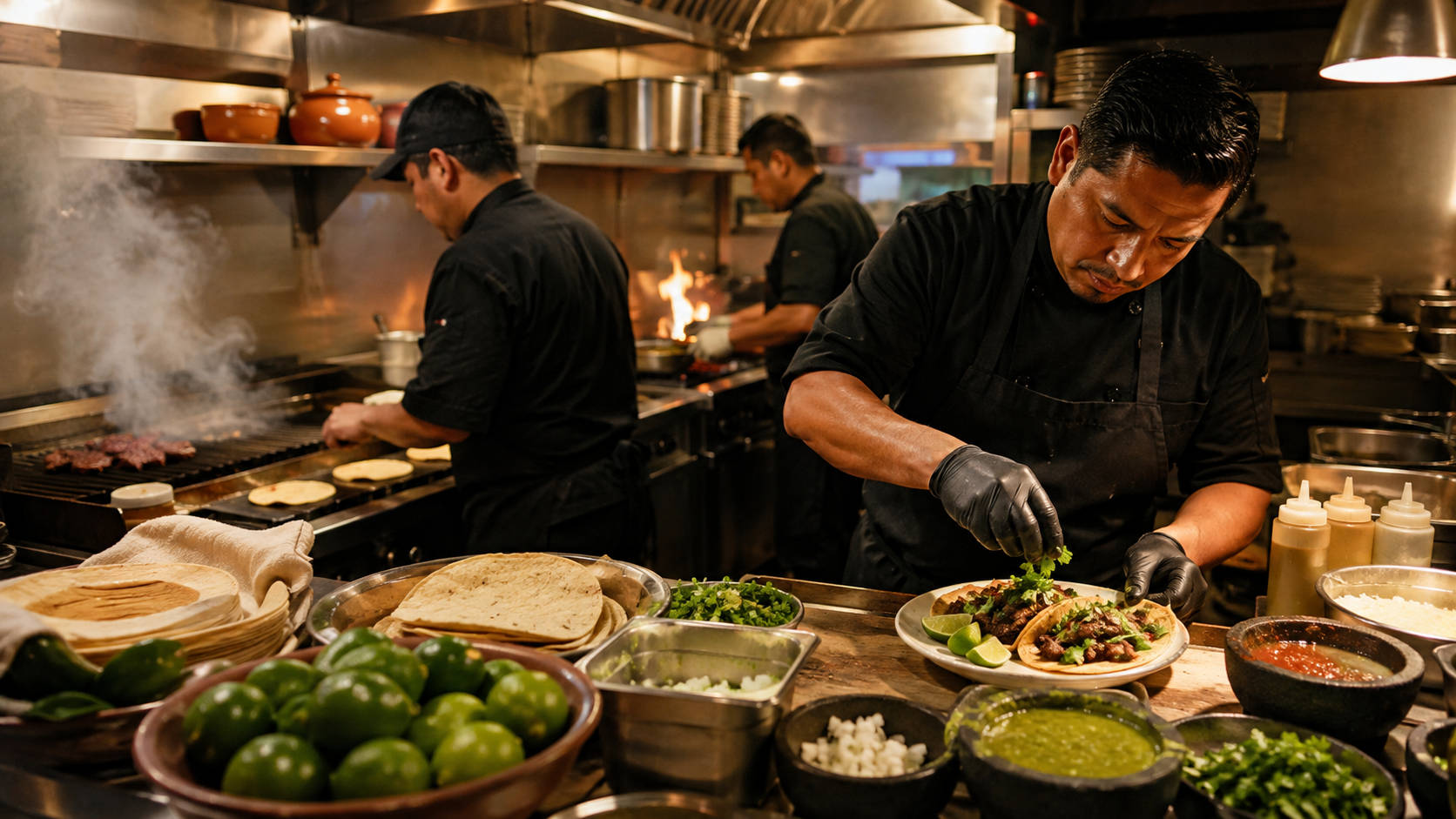
- Mexican Food in America Is Getting More Specific
- Birria Shows What Can Happen When Diners Learn the Dish
- Your Server Can Explain the Dish. Your Website Can’t — Unless You Teach It To
- Keep the Real Name. Make the Description Do the Explaining.
- For Unfamiliar Food, the Photo Is Part of the Explanation
- Customization Should Clarify the Dish, Not Turn It Into a Questionnaire
- One New Dish Shouldn’t Mean Updating Five Different Menus
- Use Your Digital Menu as a Test Kitchen
- Bringing It Back to the Tetela
- Frequently Asked Questions
- More Helpful Reads
A customer is scrolling your online menu a little after 8:30 on a Tuesday night. They know what a burrito is. They know tacos. Then they hit a line that reads:
Tetela — $14
And nothing else.
They pause. Maybe they open a new tab and search the word. Maybe they don’t bother and scroll back up to order tacos instead. Inside the restaurant, none of this would have happened — a server would have said “it’s a triangular masa pocket with a filling,” and the customer would have ordered it without a second thought.
So here’s the question at the center of this piece: can your restaurant digital menu do that same job?
It’s a real problem now, because two things are happening at once. Mexican restaurant menus in the U.S. are getting more regionally specific, and the way diners find and order food has moved online. The challenge is keeping a dish’s real name and identity while still giving an unfamiliar customer enough information to order it with confidence.
Mexican Food in America Is Getting More Specific
The dishes themselves aren’t new. What’s changing is how many diners are running into their real names.
Resy’s 2025 dining retrospective pointed to greater regional specificity in cuisines as one of the year’s notable shifts. Food & Wine reported the same year on tetelas turning up at restaurants across multiple U.S. cities. A traditional tetela is a triangular masa preparation associated with the Mixteca region, usually filled and then cooked on a comal. According to Food & Wine’s reporting, chefs are now working with the format in both traditional and modern directions.
Tetelas are one example. Diners are also encountering tlayudas, huaraches, aguachile, cochinita pibil, vampiros, and esquites — dishes that may be everyday food to one customer and completely unfamiliar to the person sitting next to them. Many have deep regional histories in Mexico. What’s shifting is their visibility on U.S. restaurant menus, not their existence.
For a restaurant, that visibility is an opportunity: regional specialties give diners a reason to choose you over the taquería down the street. But it cuts both ways. A dish that’s well known in Oaxaca or Sinaloa can still read as a mystery to a customer three tabs deep in an online ordering menu. The trend isn’t that these dishes suddenly exist. It’s that more people are meeting them by name — and a name alone doesn’t always sell the plate.
Birria Shows What Can Happen When Diners Learn the Dish
Birria is the clearest recent example of what happens when a regional dish becomes something diners recognize on sight.
Restaurant Business, citing Technomic Ignite Menu data, reported that birria menu mentions climbed more than 17% in 2025 compared with 2024. And Grubhub data, also reported by Restaurant Business, showed nearly 1.3 million birria orders on the platform in 2024. Those are big numbers for a dish plenty of American diners couldn’t have named a few years earlier.
What drove it wasn’t a marketing campaign. It was familiarity. Consumers could see birria — watch it get dipped in consommé, understand how it was served — largely through social media and digital ordering. The dish stopped feeling like a risk.
The lesson isn’t that every regional dish will become the next birria — most won’t, and chasing viral trends is a good way to lose the plot. The quieter takeaway: when customers understand a dish, they feel less risk in ordering it. Education, not hype, lowered the barrier, and any restaurant can apply that to its own menu.
Your Server Can Explain the Dish. Your Website Can’t — Unless You Teach It To
At a table, an unfamiliar dish is barely a hurdle. A customer asks a few quick questions — What’s in it? Is it spicy? How big is it? What does it come with? Is it vegetarian? — and a good server answers them in about ten seconds. The uncertainty is gone before it becomes a reason not to order.
Online, no one is standing there to answer. The description, the photo, the modifier structure, and where the item sits on the menu have to do that work instead. If they don’t, the questions go unanswered and the customer moves on to something safer.
The data backs this up. DoorDash reports that 76% of consumers say detailed descriptions help them decide what to order. Uber Eats tracks a “Menu Details” metric based on whether items include a written description, a photo, or both, and says those details help customers know what to expect and can lead to more orders. Grubhub says restaurants that follow menu best practices like adding photos and descriptions have seen as much as 70% more orders and 65% higher sales on its platform, compared with restaurants that don’t.
Treat those figures as what each platform has observed, not a guarantee for every restaurant. But the direction is consistent: the more a menu explains, the easier it is for someone to say yes — as long as you build the answers into it.
Keep the Real Name. Make the Description Do the Explaining.
The wrong fix for an unfamiliar dish is to rename it into something generic. “Mexican Stuffed Corn Pocket” tells a customer almost nothing, and it strips away the identity that made the dish worth putting on the menu in the first place.
The better fix is to keep the real name and let the description carry the explanation:
Tetela — Griddled triangular blue-corn masa filled with black beans and Oaxaca cheese, served with roasted salsa.
The name and the description do two different jobs. The name preserves the dish’s identity. The description removes the uncertainty. You need both.
A couple more examples, keeping in mind that real recipes vary by restaurant and region:
Aguachile — Chilled shrimp cured in lime with chile, cucumber, and red onion. Bright, citrusy, and spicy.
Tlayuda — A large, crisp Oaxacan-style tortilla layered with beans, cheese, cabbage, salsa, and your choice of protein.
Good descriptions answer the same short list of questions: what the dish physically is, its core ingredients, its texture, its heat level when that matters, and what comes with it. That’s usually enough for a customer to picture the plate and order it — no history lesson required. A diner shouldn’t have to read a paragraph about the Mixteca region to order lunch. Keep the name, explain the food in a sentence or two, and let anyone who’s curious ask more when they visit.
For Unfamiliar Food, the Photo Is Part of the Explanation
For a dish a customer doesn’t recognize by name, a photo isn’t decoration — it’s information. It answers, instantly, what a description can only describe: What shape is it? How big? Is it plated or eaten with your hands? Is it saucy? What’s on top?
A tlayuda and a huarache can sound similar in text. A photo settles the difference in a second.
That’s why accuracy matters more than polish. Uber’s current merchant guidelines recommend that item photos represent the actual dish, stay centered and clearly visible, and avoid misleading or cluttered imagery. A photo that oversells the plate just sets up a disappointed customer and a possible refund.
So the goal isn’t magazine-perfect food styling. It’s an honest, clear picture of what shows up when the order arrives. Orders.co’s POS can display product images on menu tiles and show them across menus wherever an item has an assigned image, including POS, website, kiosk, and integrated order sources. The point is simply that the picture a customer sees should match the food they get.
Customization Should Clarify the Dish, Not Turn It Into a Questionnaire
Mexican restaurant menus tend to involve choices: protein, salsa, spice level, tortilla, toppings, add-ons, sides. Online, those choices live in menu modifiers, and modifiers are genuinely useful — they let a customer build the order they actually want without calling the restaurant.
The trouble starts when there are too many, or they show up in the wrong order. Dropping 25 unrelated options on someone at once doesn’t feel like customization — it feels like a form. Better to let choices appear in the order a person would actually make them: tacos, then a protein, then a salsa, then any extras, each step following from the last.
DoorDash positions modifiers as both a customer-experience tool and a way for restaurants to offer optional extras that can raise ticket size. Both things can be true; the experience just has to come first.
This is where Orders.co’s nested modifier groups fit: additional options can appear based on a previous selection, and you can set minimum and maximum selection rules. In practice, that lets a digital menu follow the same logic a server uses when walking a customer through their order — one question at a time, in an order that makes sense.
One New Dish Shouldn’t Mean Updating Five Different Menus
Say you add a weekend special: Cochinita Pibil. To do it right, that dish has to show up correctly on your website, your direct online ordering, DoorDash, Uber Eats, Grubhub, and possibly your kiosk or POS. Same name, same price, same description, same photo, same availability, same modifiers — everywhere.
When those menus aren’t connected, that’s where things break. One platform still shows last month’s description. Another is missing the photo. The special stays live on a third after it’s sold out. Prices drift apart. Someone forgets a platform entirely, and now a customer is ordering a dish the kitchen isn’t making that day.
None of that is a food problem. It’s a menu-syncing problem, and it gets worse every time you add something new or run a special — which is exactly when you’re trying to make a good impression.
Orders.co’s Master Menu Management System is built for this. It lets restaurants manage and sync menu information — names, prices, descriptions, photos, availability — across connected ordering channels from one place, instead of editing each platform by hand.
Use Your Digital Menu as a Test Kitchen
Here’s the freeing part: you don’t have to commit a regional dish to the permanent menu to find out whether customers want it. A digital menu is easier to change than a printed one, so use that.
Run a weekend special. Try a seasonal agua fresca, a limited-time dessert, a different protein, or a family meal. Put it up, give it a clear name and description, and see what happens.
Then judge it by what people actually order, not by how many likes the photo got. Social attention and real orders don’t always line up, and your sales data is the more honest signal — a dish can look great online and still sit untouched.
One caveat: the data tells you what sells, not what belongs. Whether a dish fits your restaurant, your region, or your kitchen is still your call. Technology can show you the numbers; it can’t tell you what’s worth cooking.
Bringing It Back to the Tetela
Come back to that tetela from the beginning. The problem was never that a customer didn’t know the word — restaurants introduce people to unfamiliar food all the time, and diners are usually game to try it. The problem was that the online menu gave them no reason to take the next step.
As Mexican restaurant menus get more regional and more specific, digital menus shouldn’t flatten that specificity — they should help diners understand it. That means keeping the real names, explaining the dishes clearly, showing them accurately, making customization intuitive, and keeping the information consistent everywhere someone can order.
Orders.co helps restaurants manage menu descriptions, photos, modifiers, availability, and ordering channels from a more centralized system — so the dish a customer meets online is the same one that reaches their table.
Frequently Asked Questions
A good digital menu is easy to scan and easy to trust. That means clear categories, descriptions a first-time customer can understand, accurate photos, upfront pricing, modifiers that make ordering simpler rather than harder, and availability that reflects what the kitchen is actually serving right now. When those pieces are in place, customers can order confidently without needing to ask anyone.
Keep the authentic name of the dish, then use the description to explain it. In a sentence or two, cover what the item is, its core ingredients, its texture, its spice level when relevant, and what it comes with. The goal is to remove uncertainty in a few seconds without turning the menu into a history lesson.
Photos help most on best sellers and on dishes customers may not recognize by name, where a picture answers questions text can’t. But accuracy and quality matter more than filling every slot. A clear, honest photo that matches the real dish is worth far more than a rushed or misleading one, so prioritize the items where an image does real work.
Delivery platforms report that they help. DoorDash, Uber Eats, and Grubhub all say detailed descriptions and accurate photos help customers know what to expect and can lead to more orders. Treat those as platform-reported results rather than guarantees, but the pattern is consistent: photos matter most on best sellers and on dishes customers can’t picture from the name alone.
No. Renaming a dish into something generic strips away the identity that makes it worth ordering, and it still doesn’t explain the food well. Keep the authentic name and let a short, clear description do the explaining. The name preserves what the dish is; the description removes the uncertainty around ordering it.
Keep the authentic name of the dish, then use the description to explain it. In a sentence or two, cover what the item is, its core ingredients, its texture, its spice level when relevant, and what it comes with. The goal is to remove uncertainty in a few seconds without turning the menu into a history lesson.


